Core Knowledge Guide for Tear Strength Tester
Blog 31 12 月, 2025
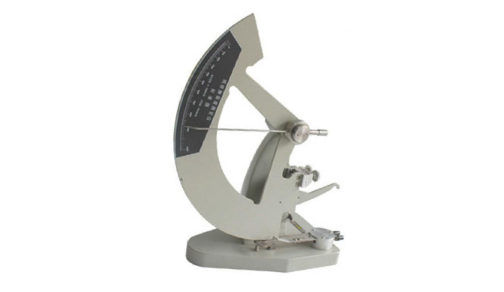
The tear strength tester is a precision instrument designed to quantify the resistance of materials—such as paper, films, fabrics, and rubber—to tearing. By simulating real-world tearing scenarios, it provides objective data for quality control, performance evaluation, and product development.
Applications
This instrument is widely used in:
Paper Industry: Packaging paper, tissue paper, and other paper products
Plastics and Films: Food packaging films, geomembranes, and similar materials
Textiles and Nonwovens: Garment fabrics, nonwoven mask materials, etc.
Rubber and Leather: Tire rubber, leather products, and other elastomeric materials
Research and Quality Inspection: Supporting material development, testing, and quality sampling
Types
By Testing Principle / Standard:
Elmendorf Type: Pendulum impact tester suitable for thin materials, compliant with ISO 6383 and GB/T 455
Tongue/Strip (Pant) Type: Tensile tearing tester for tougher materials, compliant with ISO 13937 and GB/T 3917.2
Right-Angle / Notch Type: Pre-cut specimens for specialized materials
By Automation Level:
Manual: Operated by hand, low cost
Semi-Automatic: Automatic clamping and release, with data displayed automatically
Fully Automatic: Integrated sampling, specimen preparation, continuous testing, and report generation, offering high precision
By Material:
Paper / Cardboard
Films / Plastics
Fabrics / Nonwovens
Rubber / Leather
Testing Principle
The core principle is to apply a standardized external force to tear the material along a cut or notch and measure the required energy or force.
Elmendorf Type: Uses a pendulum with known energy to impact the specimen; tear strength is calculated from the pendulum’s energy loss
Tongue/Strip Type: “Pant-shaped” specimens are fixed in the grips and pulled at a constant speed; the tester records the tearing force and work done
Right-Angle / Notch Type: Pre-cut notches are made before tearing; suitable for materials with specific properties
Selection Guidelines
Match Material and Standard: Select the tester type according to the material and applicable standard (e.g., Elmendorf for thin paper, tongue/strip for fabrics).
Clarify Precision and Efficiency: Small businesses may choose manual or semi-automatic models; laboratories or R&D scenarios benefit from fully automatic models.
Adapt to Material Parameters: Choose pendulum energy according to the expected tear strength and ensure compatibility with standard specimen sizes.
Consider Additional Features: Optional functions such as data analysis, export capabilities, and LIMS compatibility.
Balance Budget and After-Sales: Select qualified manufacturers offering calibration services and warranty (≥1 year).
Common Issues and Solutions
Large Test Deviations: Caused by improper specimen preparation, uncalibrated instruments, slipping grips, or mismatched pendulum energy. Solutions: prepare specimens according to standards, calibrate regularly, clean or replace grip pads, and use the correct pendulum energy.
Pendulum Fails to Release / Reset: Often due to mechanical jams, broken return springs, or electrical faults. Solutions: clean and lubricate the latch, replace springs, restart the instrument, or contact support for electrical issues.
No Sensor Response: May result from loose connections, damaged sensors, or software issues. Solutions: reconnect cables, check or replace sensors, reinstall software, or restore factory settings.
Unstable Specimen Clamping: Caused by worn grips, insufficient clamping force, or uneven specimen edges. Solutions: clean or replace grip pads, adjust clamping force, and ensure specimen edges are neat.
Abnormal Noise During Operation: Often caused by unlubricated pendulum shafts, poor gear engagement, or loose components. Solutions: apply specialized lubricants, check or replace gears, and tighten loose parts.
The tear strength tester is a core instrument for evaluating material resistance to tearing. Its type and operating principle must align precisely with the test material and industry standard. Widely applied across multiple industrial sectors and research laboratories, proper selection should consider material properties, testing requirements, and cost. Regular calibration and standardized operation reduce the likelihood of faults. Mastering the core knowledge of this instrument ensures accurate material quality control and efficient product development, providing essential technical support for improving product quality in relevant industries.