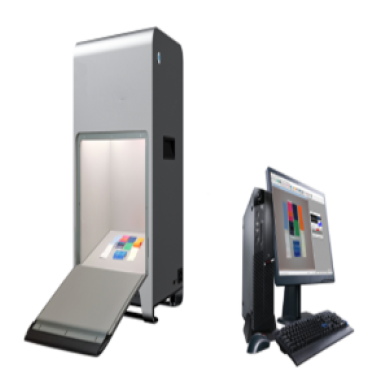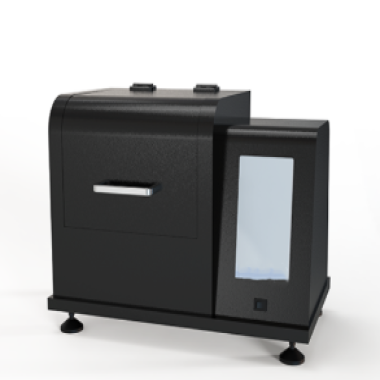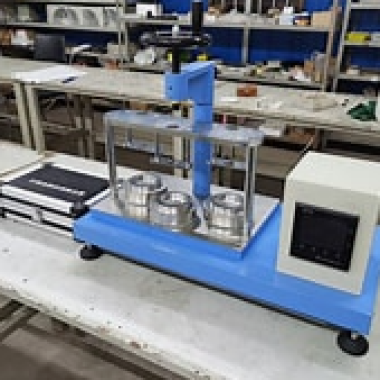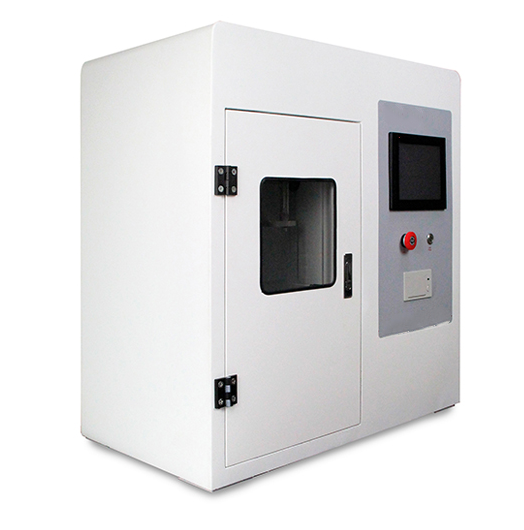
Catheter Burst Pressure Tester
Category:Other
Introduction
The Catheter Burst Pressure Tester uses the positive pressure method and is designed according to the relevant clauses of Appendix F of YY0285.1-2017 and YY0285.4-2017. It is used to test the rated burst pressure (RBP) of the catheter, the balloon fatigue test without leakage or damage during filling, the balloon decompression time test, and the test of the relationship between filling diameter and filling pressure.
Applications
The catheter burst pressure tester is a key device used to evaluate catheter performance in the medical field. Its main uses include: Evaluating Catheter Pressure – Resistance Performance: By simulating high – pressure conditions in actual usage scenarios, gradually increasing the pressure applied to the catheter until it bursts, and recording the pressure at which the catheter bursts, the pressure – resistance performance of the catheter can be evaluated.
Quality Control: During the production process of catheters, the tester can be used in the quality – control process. It helps manufacturers conduct performance tests on each batch of catheters to ensure that every catheter meets the quality standards. Medical Device R & D: In the R & D stage of medical devices, the tester can be used to evaluate the performance of catheters made of different materials and with different design schemes in high – pressure environments, providing a basis for the optimized design of products.
Third – Party Testing and Certification: The tester is also widely used in third – party testing institutions and quality certification institutions, providing technical support for the certification and quality inspection of medical devices.
Standards
YY/T 1536-2017: Catheters other than intravascular catheters — Standard test model for evaluating the surface sliding performance
YY 0285.1-2017: Disposable sterile urinary catheters — Part 1: General requirements
Technical Parameters
| Technical Parameter | Specification |
|---|---|
| Testing Accuracy | With a high – precision measurement system, the error is generally not more than ±2%FS (full – scale error). This ensures the accuracy and reliability of the test results. |
| Testing Flow | Some testers may have the function of testing flow, and the flow range is generally 0 – 500ml or other applicable ranges. Flow testing helps evaluate the performance of catheters during power injection. |
| Water Bath Temperature | During the testing process, the water bath temperature is generally controlled at 37°C±1°C or 37°C±2°C to simulate the human body temperature environment. This helps ensure the accuracy and comparability of the test results. |
| Data Recording and Display | The tester should have a data – recording function and be able to store multiple groups of test data. Meanwhile, the test data should be presented in the form of charts or curves to enable users to intuitively understand the performance of catheters. |
| Automated Control | Some testers are equipped with automated control systems, which can automatically complete the testing process and reduce errors caused by human operations. This improves the testing efficiency and accuracy. |
Accessoriess
1. One main unit
2. Constant temperature bath: ambient temperature +8-99 degrees Celsius, temperature fluctuation ±1℃
3. One acrylic water tank, 1500mm in length
4. Luer connectors: 2 sets, including 1 male and 1 female connector
5. One instruction manual
6. One certificate of conformity
7. One power cord
8. One laptop computer (optional)
9. Metrology: One calibration certificate from a metrology institution.
Features
1. High-Precision Measurement: The tester employs high-precision pressure and flow sensors to accurately measure flow and pressure data during dynamic injection, ensuring reliable test results.
2. Real-Time Monitoring and Feedback: The tester features real-time monitoring capabilities, enabling timely detection of problems during injection, such as leaks or blockages, and providing corresponding feedback. This helps doctors or operators take timely measures to ensure patient safety.
3. Automated Operation: The tester utilizes an automated control system, simplifying the testing process, reducing human error, and improving testing efficiency and accuracy.
4. Flexibility and Adaptability: The tester is suitable for different sizes and types of intravascular catheters, meeting the needs of various dynamic injection scenarios. Furthermore, it can be customized to meet specific testing requirements.
FAQ
1. What is the main purpose of the Catheter Burst Pressure Tester?
The Catheter Burst Pressure Tester is designed to evaluate the pressure-resistance performance of medical catheters. By gradually increasing fluid pressure inside the catheter until it bursts, the device records the rated burst pressure (RBP), helping to determine the catheter’s safety margin under high-pressure conditions. It can also perform balloon fatigue tests without leakage, measure balloon decompression time, and assess the relationship between filling diameter and filling pressure.
2. How does this tester support quality control in catheter manufacturing?
During catheter production, this tester is essential for quality control. Each batch of catheters can be tested to ensure they meet established pressure and safety standards. By simulating high-pressure usage scenarios, the tester helps identify defective products or inconsistencies before clinical use. This ensures that all catheters leaving the production line have consistent performance, preventing potential safety issues and ensuring reliable use in patients.
3. What features ensure accurate and reliable testing results?
The tester employs high-precision pressure and flow sensors, real-time monitoring, and automated control systems. The measurement error is generally within ±2% of full scale, ensuring highly accurate results. Real-time feedback allows detection of leaks or blockages during testing. Automated operation reduces human error and improves testing efficiency. Additionally, the water bath maintains a controlled temperature of 37°C ±1°C, simulating the human body environment for more relevant test results.
4. What precautions should be taken during testing?
High-pressure testing involves potential risks such as system failure or fluid leakage. Operators should ensure the hydraulic circuit is intact, clamps are securely applied, and the catheter is pretreated appropriately. The catheter should be immersed in a circulating fluid at 37°C ±2°C to reach thermal equilibrium before pressurization. Safety measures must be strictly followed, including wearing protective equipment and monitoring pressure increments carefully to avoid accidents.
5. How is a typical burst pressure test performed?
First, the catheter is pretreated (e.g., pre-soaked in saline or sterilized). The catheter hub is connected to the tester’s Luer connectors and secured. The hydraulic circuit is checked for leaks, and the catheter is immersed in the circulating water bath. The tester gradually injects fluid at a controlled rate (e.g., 1 mL/s) until the catheter leaks or bursts. During this process, the system records the maximum pressure, which is used to evaluate catheter performance and determine compliance with safety standards.