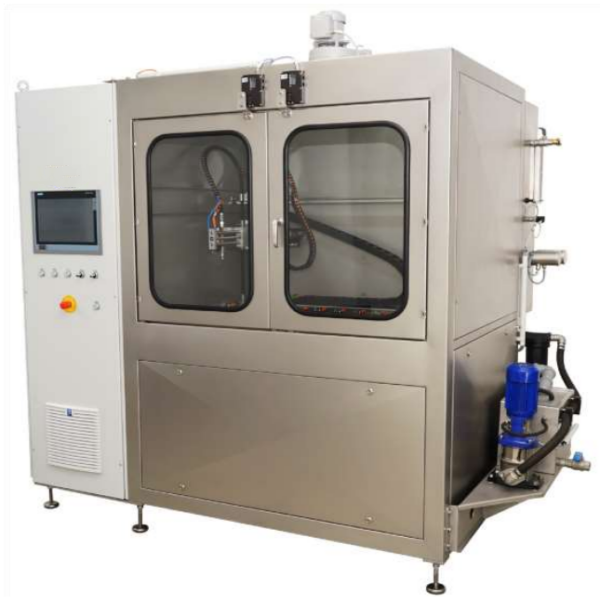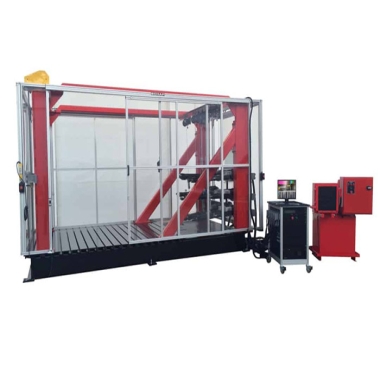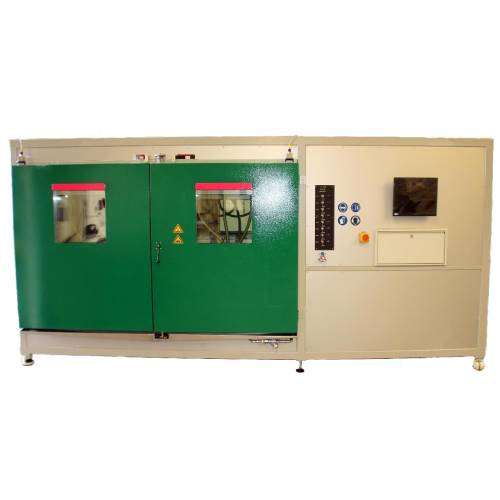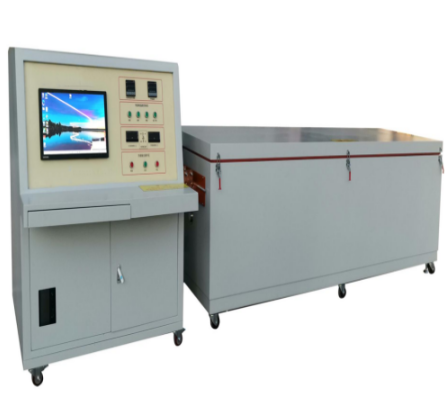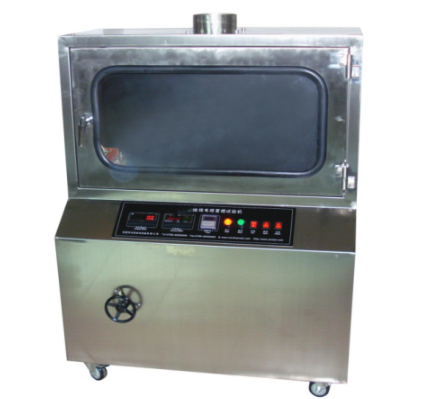
Aerospace Wire and Cable Smoke Test Apparatus
Category:Static & Dynamic Load
Introduction
The Aerospace Wire and Cable Smoke Test Apparatus is designed to assess whether aerospace-grade wires and cables emit visible smoke when subjected to specified temperature conditions. The test verifies that, during a 15-minute exposure at the target temperature, no visible smoke occurs on the test specimen, ensuring compliance with safety and material standards for aerospace applications.
Application
(1) Smoke testing of aerospace and aviation wires and cables.
(2) Verification of wire and cable insulation performance under high-temperature conditions.
(3) Quality control during production of aerospace-grade electrical systems.
(4) R&D evaluation of flame-retardant and low-smoke cable materials.
(5) Compliance testing for aerospace certification and safety standards.
Standards
(1) GJB 17.17-84 – Aerospace wire and cable test method: Smoke test
(2) MIL-W-5086C – U.S. military standard for wire and cable smoke characteristics
(3) SAE AS22759D – Aerospace cable smoke and fire performance requirements
(4) ISO 5659 – Plastics – Determination of smoke density (reference for comparative evaluation)
Parameters
| Parameter | Specification |
|---|---|
| Input Voltage | AC 220V ±10%, 50Hz |
| Working Current | DC 0–400 A (standard), optional 0–600 A / 1000 A / 2000 A |
| Power | 6 kVA |
| Voltage Drop Range | 0–5000 mV |
| Timer Range | 0–99.99 H/M/S, adjustable, auto cutoff |
| Voltmeter Accuracy | ±0.2% |
| Ammeter Accuracy | ±1% + 3 digits |
| Smoke Test Chamber | 3600 × 400 × 600 mm, black background |
| Control Box | 580 × 700 × 1000 mm |
| Temperature Monitoring | 8-channel temperature probe system, PC-compatible (PC not included) |
| Environmental Requirement | Testing must be conducted in a wind-free environment |
Features
(1) Adjustable high-current DC output ensures stable test currents.
(2) Micro-voltage measurement with high-precision digital display for accurate resistance calculation.
(3) Stable test temperature with minimal fluctuation.
(4) Automatic current cutoff when test timer reaches preset duration.
(5) 8-channel temperature monitoring with real-time data visualization via PC.
(6) Modular chamber design with black background for clear visual observation of smoke.
(7) Customizable high-current options for specific aerospace testing requirements.
Accessories
(1) Temperature probe set – 8-channel for precise monitoring.
(2) Control and measurement software – PC compatible.
(3) Calibration kit – For voltage and current verification.
(4) Protective fixtures – Adjustable mounts for wire and cable samples.
Maintenance Information
(1) Regularly inspect wiring connections and high-current components for wear or damage.
(2) Calibrate voltmeter and ammeter periodically to maintain measurement accuracy.
(3) Clean the smoke test chamber and control box to prevent contamination.
(4) Verify temperature probe accuracy before each testing cycle.
(5) Store apparatus in a dry, temperature-controlled environment to prevent corrosion and electrical faults.
FAQ
(1) What is the Aerospace Wire and Cable Smoke Test Apparatus?
It is a specialized instrument for evaluating whether aerospace wires and cables emit visible smoke under specified temperatures.
(2) What is it used for?
It verifies the insulation performance and safety of aerospace-grade wires and cables during high-temperature exposure.
(3) What is the working principle?
The instrument applies a controlled DC current while maintaining target temperature, and monitors the specimen for any visible smoke over a 15-minute period.
(4) Why is it important?
It ensures aerospace wires and cables meet safety and performance standards, preventing smoke hazards in critical applications.
(5) What industries is it suitable for?
Aerospace wire and cable manufacturers, aviation R&D laboratories, and certification authorities for safety compliance.
If you're ready to take the next step, Leave your message below and we’ll reply soon. 20+ years of manufacturing & export experience, a partner you can trust.