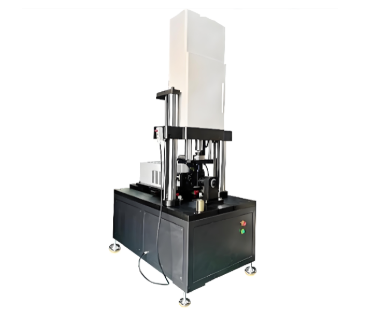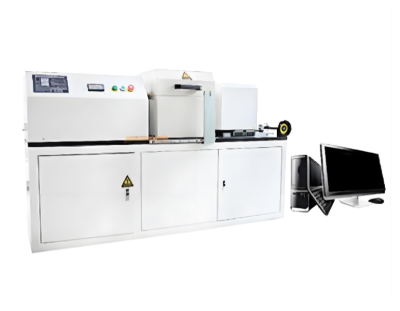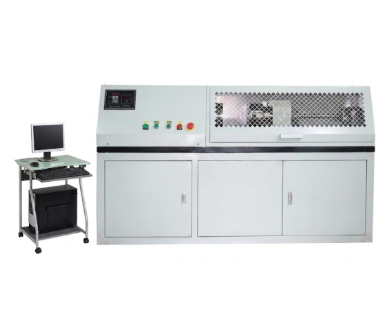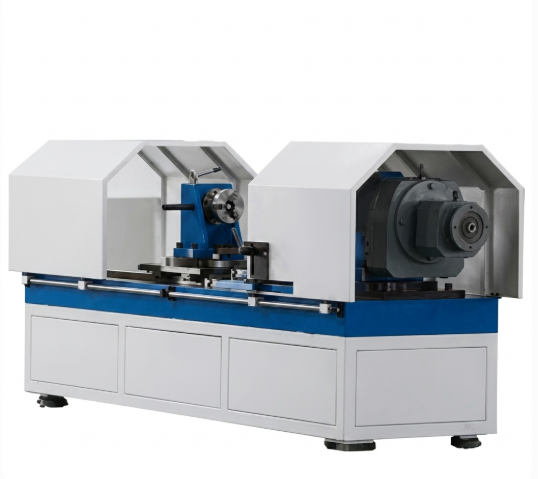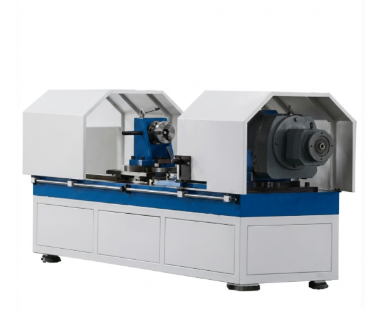
Axle Torsion & Torque Testing Machine
Category:Torsion Testing Machine

Introduction
The Axle Torsion & Torque Testing Machine is designed to evaluate the torsional performance and fatigue behavior of automotive axles and related components. It uses an AC servo drive system to apply torque in both directions and employs high-precision torque and angle measurement systems for accurate data acquisition. With torque and angle closed-loop control, the machine can perform static torsion and cyclic torsion tests.
Application
The machine is suitable for:
(1) Automotive axle torsion testing
(2) Axle torque and torsional strength testing
(3) Torsional fatigue testing
(4) Torsion angle and deformation measurement
(5) Static and cyclic torque testing
(6) Automotive component development and quality inspection
Standards
(1) GB/T 2611 — General requirements for testing machines
The applicable testing standards can be configured according to the axle type, test method and customer requirements.
Parameters
| Parameter | Specification |
|---|---|
| Maximum Torque | ±100 / 200 / 500 / 1000 / 2000 / 5000 / 10000 / 20000 / 30000 / 50000 Nm |
| Torque Indication Accuracy | ±1% from 20% FS |
| Test Frequency | 0.1–50 Hz |
| Maximum Torsion Angle | ±45° |
| Angle Indication Accuracy | ±1% |
| Control Loops | Torque and angle closed-loop control |
| Loading Direction | Forward and reverse |
| Torque Sensor | High-precision symmetrical torque sensor |
| Angle Sensor | High-precision LEC photoelectric encoder |
| Operation | Manual and computer-controlled |
| Software Platform | Windows-based dedicated test software |
| Protection | Test parameter limit protection |
| Servo Pump Station Flow | 140 L/min |
| Hydraulic Pressure | 21 MPa |
| Motor Power | 75 kW |
Features
(1) Bidirectional Torque Loading – Applies torque in both forward and reverse directions for different torsion test requirements.
(2) High-Precision Measurement – Uses a precision torque sensor and photoelectric encoder to measure torque and torsion angle.
(3) Dual Closed-Loop Control – Torque and angle can be controlled independently according to the selected test method.
(4) Static and Fatigue Testing – Supports static torsion testing and cyclic loading within the specified frequency range.
(5) Manual & Computer Operation – Provides manual forward/reverse controls as well as computer-based testing.
(6) Data Analysis Software – Windows-based software can acquire and analyze test data and calculate mechanical performance indicators.
(7) Safety Protection – Test parameter limits help prevent operation beyond the configured test conditions.
If you're ready to take the next step, Leave your message below and we’ll reply soon. 20+ years of manufacturing & export experience, a partner you can trust.