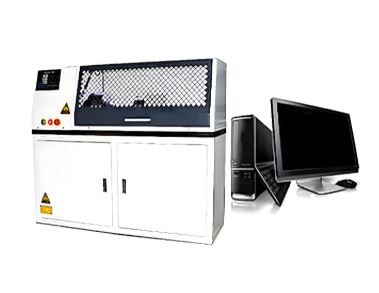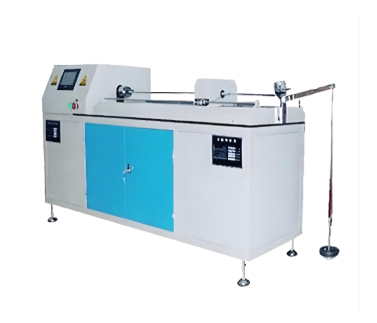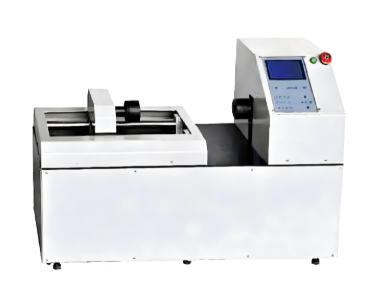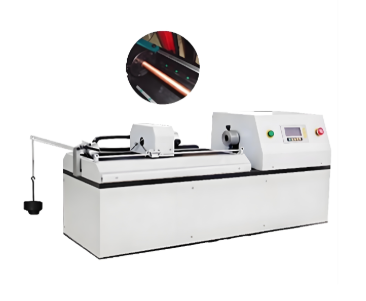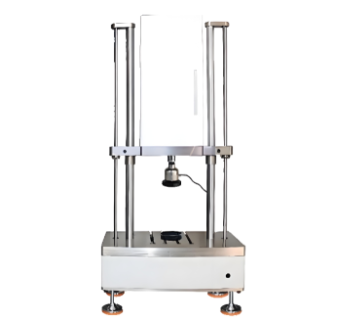
Bellows Fatigue Testing Machine
Category:Torsion Testing Machine
Factory Direct
Stable Performance
Intl. Standards
Tech Support
Fast Delivery
Global Shipping

Introduction
The Bellows Fatigue Testing Machine is designed to evaluate the fatigue performance, durability, and service life of various bellows, including metal bellows, plastic bellows, stainless steel bellows, copper bellows, expansion joints, diaphragm capsules, and other flexible components.
Application
The Bellows Fatigue Testing Machine is mainly used to evaluate the durability performance, compression fatigue, fatigue life, and dynamic/static mechanical properties of various bellows, including metal bellows, plastic bellows, stainless steel bellows, copper bellows, expansion bellows, diaphragm capsules, and other flexible components.The machine can perform various mechanical tests, such as tensile, compression, bending, high-cycle fatigue, low-cycle fatigue, fracture toughness, and crack propagation tests.With additional fixtures, the equipment can also be applied to the testing of dynamic performance, static performance, and fatigue life of various structural components and assemblies. It is widely used in product development, quality inspection, reliability evaluation, and research applications.
Applicable Standards
The Bellows Fatigue Testing Machine complies with the following standards:
GB/T 2611 — General Requirements for Testing Machines
GB/T 3075 — Metallic Materials — Fatigue Testing — Axial Force-Controlled Method
GB/T 16826 — Electro-Hydraulic Servo Universal Testing Machines
JB/T 9379 — Technical Conditions for Electro-Hydraulic Servo Fatigue Testing Machines
EJMA Standards — Standards of the Expansion Joint Manufacturers Association — Bellows Fatigue Test Requirements
ASME B31.3 — Process Piping — Fatigue Design Requirements for Bellows Expansion Joints
ISO 10785 — Space Systems — Bellows — Design and Operation (applicable to specific metallic bellows applications)
Technical Specifications
| Item | Specification |
|---|---|
| Maximum Dynamic Test Force | 10 kN / 50 kN / 100 kN / 200 kN / 300 kN / 500 kN / 1000 kN |
| Maximum Static Test Force | 500 kN / 1000 kN |
| Static Force Indication Accuracy | ±1% |
| Working Frequency Range | 2–8 Hz |
| Pulsator Maximum Displacement Volume | 400 ml/cycle / 800 ml/cycle |
| Cycle Counting Method | Every 100 operating cycles is recorded as 1 cycle |
| Motor Power | 11 kW / 22 kW |
Structural Features
Backlash Elimination System
Equipped with a backlash compensation device to eliminate clearance between mechanical connections and universal spherical joints.
Automatically centers the applied force, reduces lateral forces, minimizes impact during high-frequency tension and compression tests, and improves test waveform quality.
Multi-Level Flexible Support Guide Mechanism
Adopts a multi-stage flexible support combined guiding structure.
Starting pressure is less than 0.3 MPa with no crawling phenomenon.
High-Performance Sealing System
Uses combined sealing structures, including high-pressure seals, low-pressure seals, and leakage drainage channels.
Ensures the hydraulic cylinder assembly operates without oil leakage.
Built-In Sensor Design
The sensor is integrated inside the piston rod, providing flexible movement and avoiding external interference.
Modular Seal Structure
The combined sealing structure features excellent interchangeability, making maintenance and replacement convenient.
Precision Machined Piston Rod
The piston rod is ultra-precision machined with chrome plating and polishing treatment.
Surface roughness reaches Ra 0.4 μm.
Cylinder Structure
Double-ended piston rod structure.
Double-acting hydraulic cylinder design.
If you're ready to take the next step, Leave your message below and we'll reply soon. 20+ years of manufacturing & export experience, a partner you can trust.