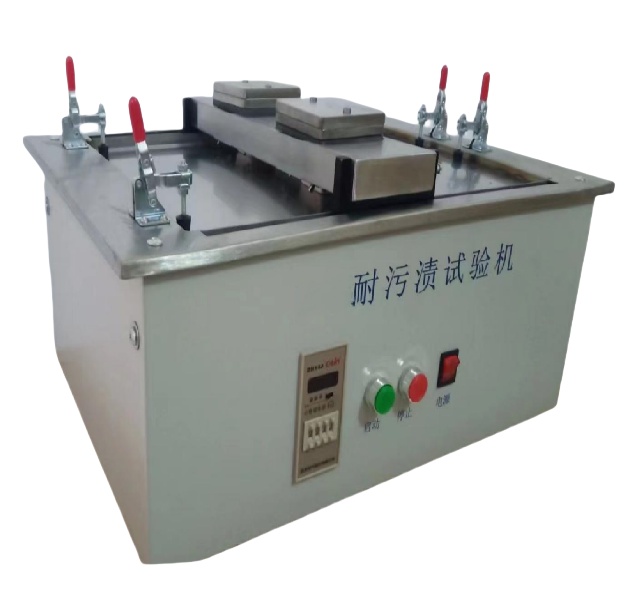
Building Coating Stain Resistance Tester
Category:Other
Factory Direct
Stable Performance
Intl. Standards
Tech Support
Fast Delivery
Global Shipping

Introduction
The Building Coating Stain Resistance Tester is designed and manufactured in accordance with the national standard GB/T 9780-2013: Methods for Testing the Stain Resistance of Building Coatings.This instrument is primarily used to evaluate the stain resistance of interior wall coatings after exposure to common household stains and cleaning with a neutral detergent. Its main purpose is to assess the ability of interior wall coatings to resist typical household stain contamination. The instrument features an LCD display for setting and counting the number of scrubbing cycles, making the entire testing process more transparent and user-friendly.
Application
Evaluate stain resistance of paints, varnishes, and coatings on building materials.
Test coatings for residential, commercial, and industrial construction surfaces.
Support quality control, product development, and compliance with industry standards.
Simulate real-world contamination scenarios to assess cleanability and durability.
Technical Parameters
| Parameter | Specification |
|---|---|
| Friction Head (including weight) | 1500 ± 10 g |
| Friction Speed | 10–99 cycles/min (adjustable) |
| Friction Stroke | 300 mm |
| Number of Friction Cycles | 0–99.999 (adjustable) |
| Input Voltage | AC 220 V, 50 Hz |
| Test Panel Specifications | Black PVC sheet, 432 mm × 165 mm × 0.25 mm |
| Overall Dimensions | 590 mm × 460 mm × 300 mm |
Principle
The stain resistance of the coating is evaluated using the stain removal rate method. Stains are used as the contamination source and are applied to the coated test panels by dipping or spreading methods. The resistance to stains is then tested under a specified load and number of cycles. The stain resistance of the coated panel is determined by measuring the change in reflectance before and after the test.
Accessories
(1)Stain Applicators: Brushes, rollers, or droppers for applying standardized stains.
(2)Test Panels or Holders: Secure coated samples in a reproducible position.
(3)Cleaning Tools: Wipes, scrapers, or solvents for stain removal testing.
(4)Control Timer/Device: Ensures consistent exposure time for stains.
Maintenance Information
Daily Cleaning: Wipe applicators, holders, and panels after each test to prevent contamination.
Calibration: Check timers, temperature, and exposure controls for accuracy.
Inspection: Examine moving parts and panels for wear or damage; replace as needed.
Storage: Keep the device in a clean, dry, and dust-free environment.
FAQ
1. What is the purpose of this tester?
It evaluates the stain resistance of building coatings, including paints, varnishes, and protective finishes, to ensure durability and cleanability.
2. Which coatings can be tested?
Applicable to interior and exterior paints, varnishes, sealants, and other protective coatings used in construction.
3. How are stains applied and assessed?
Standardized stains such as coffee, oil, ink, or food substances are applied; residual stains or discoloration are measured after cleaning.
4. What standards does this tester comply with?
Supports industry standards for stain resistance testing, such as ISO 2812 and ASTM D1308.
5. How should the equipment be maintained?
Clean applicators and sample holders after each test, check timers and controls, inspect moving parts, and store in a dry, dust-free environment.
If you're ready to take the next step, Leave your message below and we'll reply soon. 20+ years of manufacturing & export experience, a partner you can trust.