Combustion Smoke Toxicity Tester
Category:Flammability Tester
Introduction
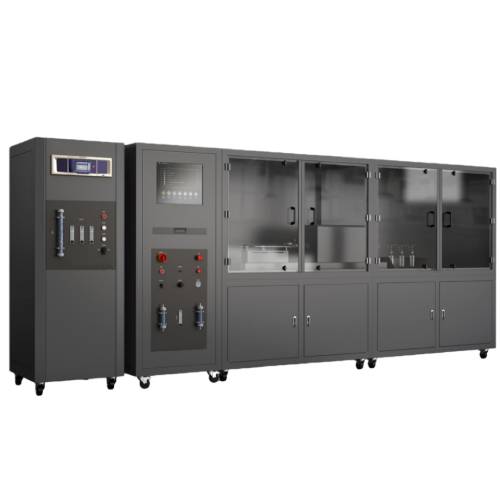
The GB/T 19666 Toxicity Index Tester (Combustion Smoke Toxicity Tester)is a specialized instrument designed for evaluating the toxicity of combustion gases generated from flame-retardant and fire-resistant wires, cables, and optical cables. Based on controlled thermal decomposition or combustion in a tube furnace, the system introduces a defined flow of smoke into standard absorption solutions or gas sampling bags for subsequent quantitative analysis. The tester is widely applied in smoke toxicity assessments required by railway, cable, and fire safety standards, providing reliable data to support material safety evaluation under fire conditions.
Application
The ASTM E1678 Combustion smoke toxicity tester is used for smoke toxicity testing in accordance with multiple international and regional standards. Typical application scenarios include:
Flame-retardant and fire-resistant power cables
Railway rolling stock cables and signal cables
Optical fiber cables and communication cables
Polymer insulation and sheath materials
Halogen-containing and halogen-free cable compounds
The instrument supports both absorption-liquid analysis and gas bag collection methods, allowing flexible downstream analysis depending on the test standard and laboratory requirements.
Standards
The system complies with the following standards and test methods:
(1) GB/T 19666 – General Rules for Flame-Retardant and Fire-Resistant Wires, Cables or Optical Cables
(2) EN 50305 – Railway Applications – Test Methods for Fire Behaviour of Electric Cables
(3) BS 6853 Annex B – Code of Practice for Fire Precautions in the Design and Construction of Passenger Carrying Trains
(4) ISO 19700 – Controlled Equivalence Ratio Method for the Determination of Toxic Product Yields in Fire Effluents (Steady-State Tube Furnace Method)
(5) ASTM E1678
(6) NFPA 269
Parameters
| Item | Specification |
|---|---|
| Tube furnace heating length | 600 mm |
| Temperature range | 0–1100 °C |
| Temperature accuracy | ±0.1 °C |
| Quartz tube | Heat-resistant quartz, thickness ≥ 2 mm |
| SO₂ measurement range | 0–1000 ppm |
| SO₂ resolution | 1 ppm |
| SO₂ accuracy | ±30 ppm |
| NOₓ measurement range | 0–3000 ppm |
| NOₓ resolution | 1 ppm |
| NOₓ accuracy | ±30 ppm |
| Gas sampling bag | PTFE-coated, 80 L capacity, with imported manual sampler |
| CO measurement range | 0–10 % |
| CO resolution | 0.01 % |
| CO accuracy | Absolute ±0.1 % or relative ±3 % |
| CO₂ measurement range | 0–20 % |
| CO₂ resolution | 0.01 % |
| CO₂ accuracy | Absolute ±0.2 % or relative ±3 % |
| Spectral analysis device | Spectrometer at 500 nm wavelength, membrane thickness 10 mm |
| Absorption solution | 0.1 N NaOH |
| Titration reagents | Picric acid aqueous solution (3 g/dm³) and sodium carbonate aqueous solution (50 g/dm³) |
Features
Sealed chamber design with the smoke generation system installed internally, providing stable operation and effective protection of core components
Large observation window allowing clear visual monitoring of test status and specimen movement
Integrated industrial design with panel-mounted structure, offering intuitive operation and ergonomic user interface
Tube furnace protected by perforated outer housing to enhance heat dissipation and ensure uniform temperature rise to the target value
High-temperature K-type thermocouple for accurate measurement of specimen zone temperature
Ceramic combustion boat driven by strong magnetic coupling and transmission mechanism for stable and repeatable specimen delivery into the furnace core
Precision lead-screw transmission system enabling accurate positioning and reliable sealing of the quartz tube, reducing the risk of damage due to manual operation
Dual filtration columns filled with activated carbon and color-changing silica gel for effective carrier gas purification and drying
Branded computer with dedicated control software for automatic test process control
Software-based temperature regulation and stabilization with real-time curve recording, automatic data display, storage, and report generation
Accessories
(1) Heat-resistant quartz tube
(2) Ceramic combustion boat
(3) PTFE-coated gas sampling bag (80 L)
(4) Activated carbon filter column
(5) Color-changing silica gel filter column
(6) K-type thermocouple
(7) Dedicated control software and industrial computer
Maintenance Information
Regularly inspect the quartz tube, ceramic combustion boat, and furnace interior for residue buildup and clean them as required. Check the condition of the activated carbon and silica gel in the filter columns and replace them when saturation or discoloration is observed. Verify calibration of gas analyzers and temperature sensors according to laboratory quality procedures. Ensure the lead-screw transmission and magnetic drive mechanisms operate smoothly to maintain positioning accuracy.
FAQ
What types of materials can be tested using the GB/T 19666 Toxicity Index Tester?
The tester is primarily designed for flame-retardant and fire-resistant wires, cables, and optical cables. It is also suitable for evaluating polymer insulation materials, sheath compounds, and other cable-related materials that may generate toxic gases during combustion or thermal decomposition. The test configuration supports both halogen-containing and halogen-free materials, in accordance with GB/T 19666 and related international standards.
How are combustion gases collected during the test?
Combustion gases generated in the tube furnace are transported by a controlled carrier gas flow. Depending on the test requirement, the gases are either bubbled through a standard 0.1 N NaOH absorption solution or collected in an 80 L PTFE-coated gas sampling bag. This dual approach allows compatibility with different analytical methods specified in EN 50305. BS 6853 Annex B, and ISO 19700. ensuring accurate downstream toxicity analysis.
Why is precise temperature control important in toxicity index testing?
Accurate and stable temperature control is critical because the type and concentration of toxic gases produced during combustion are strongly dependent on thermal conditions. The software-controlled tube furnace ensures uniform heating and precise temperature regulation up to 1100 °C, while real-time temperature recording allows verification of test repeatability and compliance with standard requirements.
Which gases are measured by the system?
The system measures key toxic combustion gases including SO₂, NOₓ, CO, and CO₂. Online infrared gas analyzers provide continuous CO and CO₂ measurements, while SO₂ and NOₓ are determined through dedicated detection channels or chemical analysis methods based on collected samples.
If you're ready to take the next step, Leave your message below and we’ll reply soon. 20+ years of manufacturing & export experience, a partner you can trust.