Contact Lens Luminous Transmittance Analyzer
Category:Other
Factory Direct
Stable Performance
Intl. Standards
Tech Support
Fast Delivery
Global Shipping
Introduction
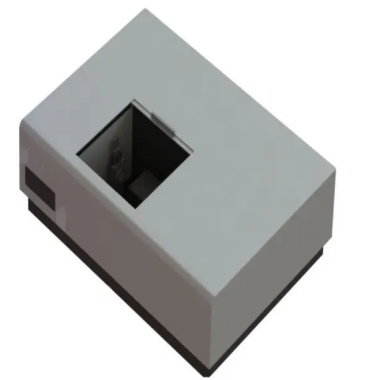
The Contact Lens Luminous Transmittance Analyzer is a precision instrument designed to measure the spectral transmittance of soft and hard contact lenses, including hydrogel, silicone hydrogel, artificial cornea, RGP, and Ortho-K lenses. The instrument integrates a built-in integrating sphere to ensure highly accurate measurements that comply with international standards. It features a specially designed lens clamp that prevents deformation, enabling reliable and repeatable results. This analyzer is ideal for manufacturers, laboratories, and research institutions focusing on optical performance evaluation and quality control of contact lenses.
Application
(1) Measurement of spectral transmittance for soft contact lenses (hydrogel/silicone hydrogel/artificial cornea).
(2) Measurement of spectral transmittance for hard contact lenses (RGP, Ortho-K).
(3) Quality control in contact lens manufacturing.
(4) Research and development of new lens materials with specific optical properties.
(5) Verification of compliance with national and international standards for ophthalmic optics.
(6) Optical characterization for product certification and regulatory submission.
Standards
(1) GB/T 11417.5 – Ophthalmic optics – Contact lenses – Spectral transmittance test method.
(2) ISO 18369 – Ophthalmic optics – Contact lenses – Requirements and test methods.
(3) ANSI Z80.20 – American National Standard for Contact Lens Optical Properties.
(4) ISO 8980-4 – Ophthalmic optics – Lenses for correction of vision – Part 4: Transmittance specifications.
(5) IEC 61010 – Safety requirements for laboratory and measuring equipment.
Technical Parameters
| Parameter | Specification |
|---|---|
| Measurement Medium | Air, solution (pure water or standard salt solution) |
| Measuring Aperture | 6 mm |
| Maximum Lens Diameter | 18 mm |
| Wavelength Range | 280–780 nm |
| Wavelength Interval | 1–10 nm adjustable (default 5 nm) |
| Transmittance Repeatability | <1.0% |
| Absolute Transmittance Error | <1.0% |
| Instrument Size (W×D×H) | 600 × 440 × 190 mm |
| Weight | ~26.5 kg |
| Power Supply | AC 100–220 V, 50 Hz, 150 W |
| Operating System | Windows 7/8/10/11 |
| Data Interface | USB |
Features
(1) Built-in integrating sphere ensures uniform illumination and accurate lens transmittance measurement.
(2) Specially designed lens clamp prevents deformation for both soft and hard lenses.
(3) Wide spectral range (280–780 nm) for comprehensive optical evaluation.
(4) Adjustable wavelength interval (1–10 nm) for high-resolution measurement.
(5) High measurement accuracy with transmittance repeatability <1% and absolute error <1%.
(6) Supports measurement in air or solution (pure water or standard saline).
(7) User-friendly software interface compatible with Windows 7/8/10/11.
(8) Data output via USB for easy integration with laboratory information systems.
Accessories
(1) Lens clamp for soft and hard lenses.
(2) Integrating sphere (built-in).
(3) Calibration standards for spectral transmittance.
(4) Software suite for data acquisition and analysis.
(5) USB data cable.
(6) User manual and compliance certificates.
Maintenance Information
(1) Clean the lens clamp and integrating sphere regularly to prevent contamination.
(2) Calibrate the instrument periodically using standard reference filters or lenses.
(3) Ensure the measurement medium is free of bubbles or impurities.
(4) Avoid direct sunlight and dust accumulation on optical components.
(5) Store the instrument in a dry, temperature-controlled environment.
(6) Update software and firmware as recommended by the manufacturer.
FAQ
1. What is the primary purpose of this analyzer?
It measures the luminous transmittance of contact lenses to determine how much visible light passes through the lens material.
2. Which types of lenses can be tested using this device?
The analyzer is suitable for soft, rigid gas-permeable, colored, tinted, and specialty contact lenses.
3. How does the analyzer operate?
It shines a calibrated light source through the lens and measures the transmitted light using photometric sensors to calculate transmittance percentage.
4. Which standards does this analyzer comply with?
It supports international optical and ophthalmic testing standards, including ISO 8980-3 and relevant national protocols for lens transparency.
5. Who typically uses this equipment?
Contact lens manufacturers, quality control laboratories, and research institutions use it to ensure optical clarity, verify tint consistency, and comply with regulatory requirements.
If you're ready to take the next step, Leave your message below and we'll reply soon. 20+ years of manufacturing & export experience, a partner you can trust.