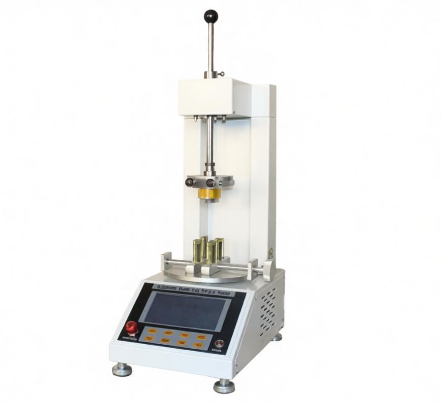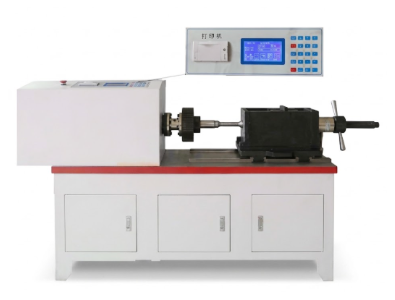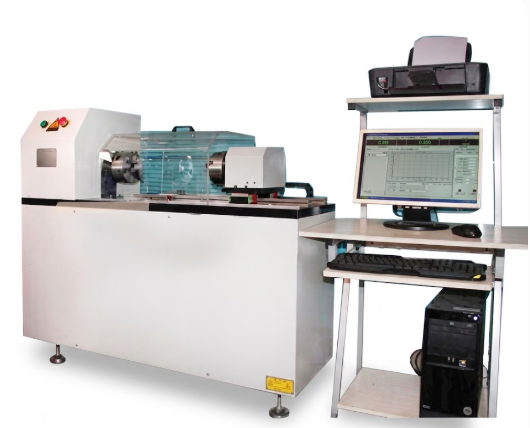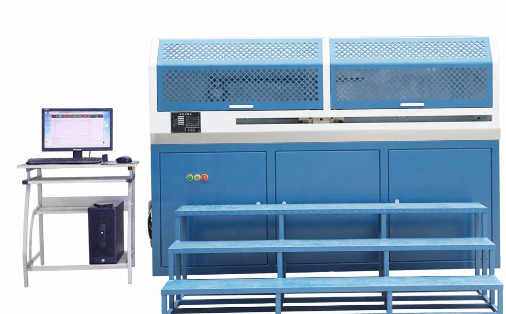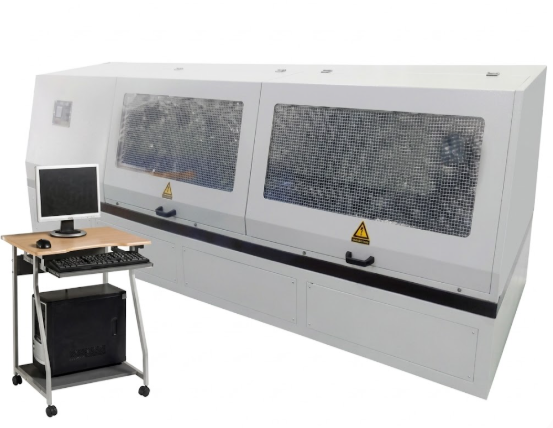
Dual-Mass Flywheel Torsion Testing Machine
Category:Torsion Testing Machine

Introduction
The Dual-Mass Flywheel Torsion Testing Machine is used for torsional stiffness testing, torsion angle testing, and torsional fatigue testing of dual-mass flywheels. One machine can perform multiple types of tests.
The system uses an industrial control computer as the core to provide automatic control of the testing process, as well as automated data acquisition, processing, and storage. The test data can also provide a reliable basis for further research and development of dual-mass flywheels.
Application
The Dual-Mass Flywheel Torsion Testing Machine is mainly used for:
(1) Dual-mass flywheel torsional stiffness testing
(2) Torsion angle testing
(3) Torsional fatigue testing
(4) Dual-mass flywheel research and development
(5) Performance evaluation and quality inspection of dual-mass flywheels

Standards
GB/T 2611 — General Requirements for Testing Machines
Parameters
| Parameter | Specification |
|---|---|
| Maximum Test Torque | 100, 200, 500, 1000, 2000, 5000, 10000 N·m |
| Test Travel | 300 / 500 mm |
| Testing Machine Class | Class 0.5 |
| Torque Measurement Range | 1%–100% FS |
| Torque Minimum Resolution | 0.01 / 0.1 N·m |
| Angle Resolution | 0.01° |
| Maximum Torsion Angle | 0–Unlimited |
| Test Speed | 0.1–720°/min, customizable |
| Angle Indication Error | < ±0.5% |
| Angle Repeatability Error | < 0.5% |
| Test Force Indication Error | < ±0.5% |
| Test Force Repeatability Error | < 0.5% |
| Test Speed Accuracy | Better than ±1% of indicated value |
| Appearance | Complies with GB/T 2611 requirements |
| Torque Loading Direction | Both directions |
| Torsion Fixtures | Standard set |
| Power Supply | 220 V, 50 Hz |
| Applicable Products | Dual-mass flywheels |
Features
(1) Multiple Test Functions – Supports torsional stiffness, torsion angle, and torsional fatigue testing.
(2) One Machine for Multiple Tests – The equipment can be used for different torsional performance tests of dual-mass flywheels.
(3) Automatic Test Control – The industrial control computer provides automatic control of the testing process.
(4) Data Acquisition and Processing – Test data can be automatically collected and processed.
(5) Data Storage – Test data can be stored for subsequent analysis and evaluation.
(6) Bidirectional Torque Loading – Torque can be applied in both directions.
If you're ready to take the next step, Leave your message below and we’ll reply soon. 20+ years of manufacturing & export experience, a partner you can trust.