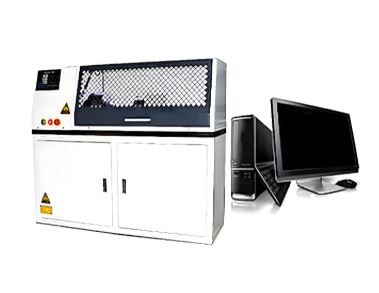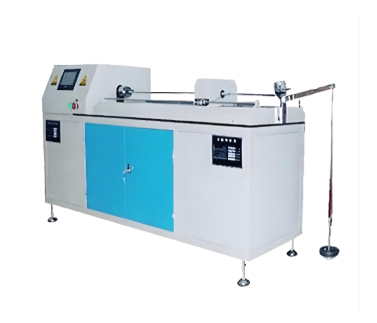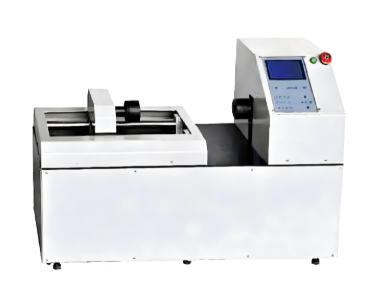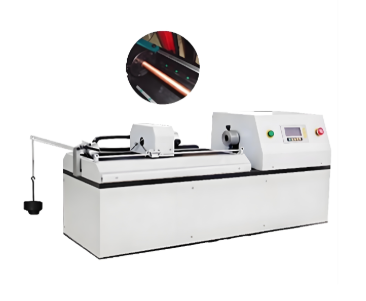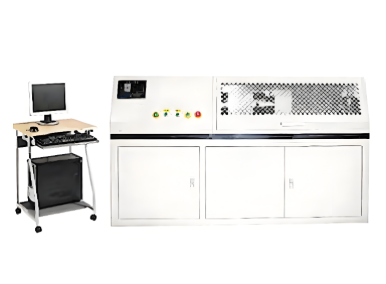
Fitness Equipment Torque Testing Machine
Category:Torsion Testing Machine
Factory Direct
Stable Performance
Intl. Standards
Tech Support
Fast Delivery
Global Shipping

Introduction
The Fitness Equipment Torque Testing Machine is mainly designed for torsional performance testing of fitness equipment, golf clubs, and related components, including golf club torsional failure/torque testing. The test specimen is installed between adjustable fixtures, allowing the machine to accommodate different specimen sizes and perform torsional mechanical performance tests.The system adopts computer-controlled operation and can collect and analyze:Torque,Peak Torque,Torsion Angle,Torque–Time Curve,Torsion Angle–Time Curve,Torque–Torsion Angle Curve.It supports test data storage, retrieval, and test report printing.
Applications
The machine can be used for torsional testing of:
Fitness equipment components
Golf clubs and shafts
Metal raw materials
Semi-finished components
Finished components
Other torsion-resistant products
Applicable Standards
GB/T 10128-1998 — Metallic Materials — Torsion Test Method at Room Temperature
GB/T 10128-2007 — Metallic Materials — Torsion Test Method at Room Temperature
Technical Specifications
| Item | Specification |
|---|---|
| Machine Configuration | Horizontal |
| Testing Machine Accuracy Class | Class 1 |
| Accurate Measurement Range | 1% FS–100% FS |
| Torque Indication Error | Better than ±1% |
| Torque Repeatability Error | Better than 1% |
| Angle Resolution | 0.01° |
| Angle Measurement Accuracy | Better than ±1% |
| Torsion Fixtures | Three-jaw chuck type; bidirectional center-tightening type |
| Test Stroke | 300 mm or 500 mm (extendable) |
| Torsion Speed Control Range | 0.01–5 r/min, stepless speed adjustment |
| Torsion Speed Control Accuracy | Better than ±1% |
| Appearance | Complies with GB/T 2611 |
| Completeness | Complies with applicable standard requirements |
| Protection Function | Overload protection |
| Power Supply | 220 V, 50 Hz |
Applications
The Fitness Equipment Torque Testing Machine is mainly used to evaluate the torsional mechanical performance of fitness equipment, golf clubs, shafts, and related components. It is suitable for:
Fitness Equipment Testing: Evaluating the torque strength and torsional performance of shafts, handles, connecting rods, and other load-bearing components.
Golf Club Testing: Determining torsional strength, maximum torque, torsion angle, and failure performance of golf clubs and shafts.
Raw Material Testing: Evaluating the torsional properties of metal and other engineering materials.
Component Testing: Testing semi-finished and finished components for torsional strength and durability.
Product R&D: Supporting material selection, structural optimization, and product design.
Quality Control: Used for incoming inspection, production quality control, and finished-product verification.
Laboratory Testing: Suitable for quality inspection departments, research institutions, and third-party laboratories.
Main Features
Horizontal Test Structure: Provides stable specimen installation and convenient operation.
High-Precision Measurement: Torque indication error is better than ±1%, with repeatability error better than 1%.
High-Resolution Angle Measurement: Angle resolution reaches 0.01°, with measurement accuracy better than ±1%.
Wide Speed Range: Torsion speed can be continuously adjusted from 0.01–5 r/min, with control accuracy better than ±1%.
Flexible Fixtures: Equipped with three-jaw chuck and bidirectional center-tightening fixtures to accommodate different specimens.
Adjustable Test Stroke: Standard test stroke of 300 mm or 500 mm, with extended configurations available.
Computer-Controlled Testing: Supports automatic test control, data acquisition, curve display, and test result analysis.
Multiple Test Functions: Can measure torque, peak torque, torsion angle, torsion speed, and other parameters.
Overload Protection: Built-in overload protection helps protect the testing machine and specimen.
Standardized Design: The machine appearance and overall requirements comply with GB/T 2611.
If you're ready to take the next step, Leave your message below and we'll reply soon. 20+ years of manufacturing & export experience, a partner you can trust.