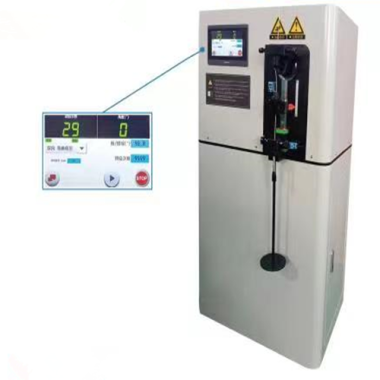
Metal Wire Repeated Bending Tester
Category:Static & Dynamic Load
Factory Direct
Stable Performance
Intl. Standards
Tech Support
Fast Delivery
Global Shipping
Introduction
The Metal Wire Repeated Bending Tester is designed to evaluate the bending fatigue performance of metal wires under repeated stress. It measures the wire’s ductility and identifies potential surface or internal defects that may lead to premature failure. By applying controlled bending cycles, the tester provides quantitative results for wire performance assessment, quality control, and material research. It is widely used in wire manufacturing, R&D, and quality inspection departments.
Application
(1) Testing bending fatigue resistance of metal wires.
(2) Evaluating ductility and plastic deformation under repeated bending.
(3) Detecting hidden surface or internal defects in wires.
(4) Quality inspection in wire and cable manufacturing.
(5) Research and development of elevator ropes, spring wires, and electrical conductors.
(6) Testing wires used in automotive, aerospace, and construction industries.
(7) Laboratory experiments and materials research in universities and technical institutes.
Standards
(1) GB/T 238-2013 – Metal Material Wire Repeated Bending Test Method.
(2) GB/T 235 – Metal Material Sheets and Thin Strips (≤3mm) Repeated Bending Test Method.
(3) ISO/DIS 7801-1983 – Repeated Bending Test of Metal Wire.
(4) ASTM standards related to metal wire fatigue and bending tests.
(5) JIS and DIN standards for repeated bending and torsion testing of metallic materials.
Parameters
| Parameter | Specification |
|---|---|
| Sample diameter | 0.3–6 mm or 4–10 mm |
| Sample length | 150–200 mm |
| Bending angle | Left and right bending 90° |
| Bending speed | 60 times/min |
| Counting range | 0–9999 times |
| Motor power | 1.1 kW |
Features
(1) Evaluates wire bending fatigue and resistance to repeated stress.
(2) Quantifies ductility through the number of bends to failure.
(3) Detects surface and internal defects that may cause premature failure.
(4) Provides standardized testing according to national and international standards.
(5) Adjustable bending radius, angle, and speed to suit different wire specifications.
(6) Automated operation with cycle counting and automatic stop at fracture.
(7) Suitable for production, R&D, and quality inspection applications.
Accessories
(1) Main testing machine
(2) Adjustable round rods for different wire diameters
(3) Bushings for bending position adjustment
(4) Power cable
(5) User manual
Maintenance Information
(1) Regularly inspect the bending rods, bushings, and motor for wear or damage.
(2) Ensure the counting system operates correctly and is calibrated.
(3) Maintain power supply stability and check electrical connections.
(4) Clean the machine to prevent debris interference.
(5) Lubricate moving parts according to manufacturer guidelines.
(6) Handle the machine components carefully to prevent misalignment or damage during operation.
FAQ
1. What is the primary purpose of this tester?
It evaluates the flexibility and fatigue resistance of metal wires by repeatedly bending them to determine their durability under cyclic stress.
2. Which types of wires can be tested using this device?
The tester is suitable for copper, aluminum, steel, and other metal wires used in electronics, electrical components, automotive, and industrial applications.
3. How does the tester operate?
It bends the wire back and forth around a fixed angle or mandrel under controlled speed and cycles while monitoring for breakage, cracks, or insulation damage.
4. Which standards does this tester comply with?
It supports international standards such as IEC 60228. ASTM B496. and ISO 6722 for wire bending and fatigue testing.
5. Who typically uses this equipment?
Wire manufacturers, quality control laboratories, and R&D teams use it to verify wire flexibility, optimize design, and ensure consistent product reliability.
If you're ready to take the next step, Leave your message below and we'll reply soon. 20+ years of manufacturing & export experience, a partner you can trust.