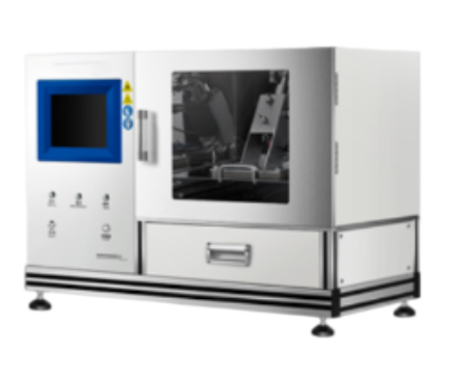
Oxidizing Liquid Time Pressure Tester
Category:Other
Factory Direct
Stable Performance
Intl. Standards
Tech Support
Fast Delivery
Global Shipping

Introduction
Conforms to UN Recommendations on the Transport of Dangerous Goods – Manual of Tests and Criteria 11.6.1 Test 1(c)(i): Time/Pressure Test, 12.6.1 Test 2(c)(i): Time/Pressure Test, 23.4.1 Test C.1: Time/Pressure Test, and GB/T 21579-2008 Time/Pressure Test Method for Dangerous Goods.
Applications
The Oxidizing Liquid Time Pressure Tester is used to determine the potential of a liquid substance to increase the combustion rate or intensity of a combustible substance when mixed with it.
Standards
(1)GB/T 21620:Dangerous goods – Test methods for oxidizing liquids
(2)GB/T 21579-2008:Dangerous goods – Test method of time/pressure
(3)NY/T 1860:Guidelines on the determination of physico-chemical properties of pesticides
Technical Parameters
| Operating Environment | (5 to 40)°C, <85%RH |
| Pressure Transducer Response Capability | Responds to pressure change from 0MPa-3MPa vessel cavity in 5ms |
| Pressure Measurement Range | (0 to 5)MPa |
| Pressure Measurement Accuracy | ±0.1%FS |
| Heating Method | Electronic Ignition |
| Burst Pressure of Rupture Disk | 2.5MPa ±5% |
| Standard Timing Range | (0 to 60)s |
| Timing Display Resolution | 0.01ms |
Features
(1) Embedded processor, Windows CE operating system
(2) 8-inch LCD touch screen can display the test status in real time
(3) Automatic detection of pressure vessel air tightness (by detecting the initial pressure drop rate)
(4) With ignition sound and light alarm function
(5) Stainless steel seamless welded inner liner and pressure vessel, pressure sensor with corrosion resistance, high temperature resistance, high pressure resistance
(6) Automatic timing and high-precision pressure detection system, real-time detection and display of pressure changes
(7) With automatic pressure relief device, after the test, automatically punctured explosion-proof sheet, release pressure
(8) Automatically draw the pressure curve
(9) With reaction residue collection and anti-splash function to avoid external contamination of the sample
(10) Remote ignition to ensure the safety of experimental personnel
(11) The test process is fully automated without manual intervention, supporting parameter setting, data storage, viewing reports and other functions
Maintenance Information
(1)Routine Inspection: Check pressure vessels, seals, valves, and sensors for wear or damage before each test to ensure safe operation.
(2)Cleaning: After each test, thoroughly clean the pressure chamber, sample holders, and any contact surfaces to prevent residue buildup and contamination.
(3)Calibration and Safety Checks: Periodically verify the accuracy of pressure sensors and timing mechanisms, and ensure all safety interlocks and pressure relief systems are functional.
FAQ
1. What is the Oxidizing Liquid Time Pressure Tester used for?
It is used to evaluate the reactivity and stability of oxidizing liquids under controlled temperature and pressure conditions, providing data for safety assessments and regulatory compliance.
2. Which types of liquids can be tested?
The tester is suitable for oxidizing chemicals, industrial reagents, and other reactive liquids requiring time-pressure analysis.
3. How does the tester work?
A measured sample is placed in a sealed pressure chamber, exposed to controlled temperature and pressure, and monitored to determine reaction time, pressure buildup, and stability characteristics.
4. What safety features are included?
It includes pressure relief valves, reinforced chambers, interlocks, and automated shutdown systems to prevent accidents during testing.
5. How should the tester be maintained?
Routine maintenance involves inspecting pressure vessels and seals, cleaning the chamber and contact surfaces after each test, and calibrating pressure sensors and timing mechanisms regularly.
If you're ready to take the next step, Leave your message below and we'll reply soon. 20+ years of manufacturing & export experience, a partner you can trust.