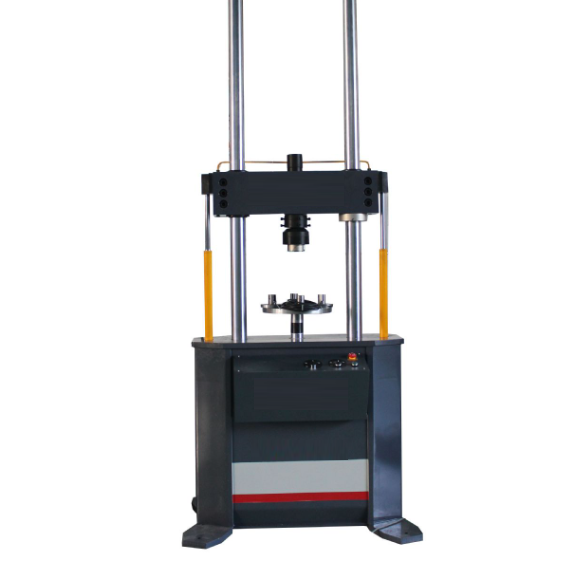
Railway Rubber Pad Dynamic & Static Stiffness Fatigue Tester
Category:Static & Dynamic Load
Factory Direct
Stable Performance
Intl. Standards
Tech Support
Fast Delivery
Global Shipping

Introduction
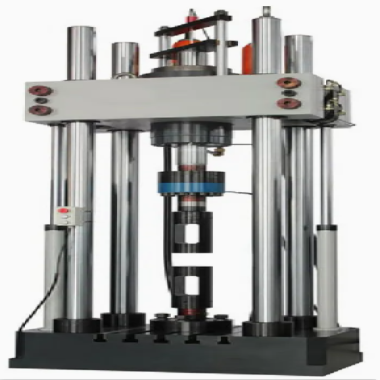
The Railway Rubber Pad Dynamic & Static Stiffness Fatigue Tester is a specialized testing system based on computer-controlled electro-hydraulic servo technology. It is primarily used for mechanical performance testing of railway rubber pads and fastening systems under static load, dynamic load, and cyclic fatigue conditions.
Designed in accordance with relevant technical standards for high-speed railways and conventional railways, the system enables comprehensive evaluation of static stiffness, dynamic stiffness, fatigue life, and assembled fastening system performance of rubber pads, meeting the requirements of high precision, high repeatability, and long-term stable operation in railway engineering applications.
Application Range
The tester is suitable for performance testing of railway track structures and related elastic components, including but not limited to the following products and application scenarios:
Rubber pads for high-speed railway tracks;
Rubber pads for conventional railway tracks;
Elastic baseplates for railway fastening systems;
Integrated assemblies of track slab–fastening–rail systems;
Railway vibration-damping pads, isolation pads, and elastic liners;
Track pads for urban rail transit systems (metro and light rail);
Material R&D, type testing, and factory inspection for railway engineering products;
Mechanical testing in railway research institutes, testing centers, universities, and research organizations.
Applicable Standards
TB/T 3395-2015 Technical Specifications for Fastening Systems of High-Speed Railway
TB/T 2626 (relevant clauses) General Technical Specifications for Railway Track Fastening Systems
TB/T 2329 (reference) Technical Specifications for Railway Elastic Baseplates
TB/T 3274 (reference) Test Methods for Railway Rubber Products
General mechanical and fatigue testing standards (reference)
GB/T 16826 Electro-Hydraulic Servo Fatigue Testing Machines
GB/T 2611 General Technical Requirements for Testing Machines
Note:
The system supports static stiffness, dynamic stiffness, and fatigue tests in accordance with railway industry standards and can be extended to meet specific user-defined technical specifications.
Technical Parameters
| Item | Technical Specification |
|---|---|
| Maximum Dynamic Load | ±50 kN / ±100 kN / ±200 kN / ±500 kN / ±1000 kN (optional) |
| Load Measurement Range | 2%–100% FS |
| Static Load Accuracy | ±1% |
| Maximum Actuator Stroke | ±50 mm / ±75 mm (depending on model) |
| Frequency Range | 0.001 – 30 Hz |
| Loading Waveforms | Sine, triangle, square, trapezoidal, ramp |
| Test Space (H × W) | 450 × 350 mm to 750 × 700 mm (depending on model) |
| Frame Configuration | Dual-column or four-column frame, actuator mounted below |
| Deformation Measurement | External three-channel high-precision deformation measurement |
| Hydraulic Flow Rate | 10 – 160 L/min (expandable) |
| Power Supply | AC 220 V / 380 V (customizable) |
Features
Designed in accordance with TB/T 3395-2015 for railway rubber pad and fastening system testing;
Fully digital electro-hydraulic servo control system with fast dynamic response and high control accuracy;
Integrated capability for static stiffness, dynamic stiffness, and fatigue testing;
External three-channel synchronized deformation measurement system, compliant with 0.01-grade deformation measurement requirements;
Supports multiple loading waveforms and frequencies to simulate real train operating conditions;
Intelligent self-diagnosis and inspection functions, suitable for long-term unattended fatigue testing;
Modular hydraulic power unit configuration to accommodate different load capacity requirements.
Accessories and Consumables
| Name | Specification | Remarks |
|---|---|---|
| Load Sensor | High-precision electro-hydraulic servo type | Standard |
| Deformation Measurement Device | Three-channel high-precision displacement sensors | Standard |
| Hydraulic Oil | Anti-wear hydraulic oil | Consumable |
| Loading Platens / Fixtures | Dedicated for rubber pads and fastening systems | Optional |
| Servo Valve | Electro-hydraulic servo/proportional valve | Key component |
| Cooling Fan | Automatic oil temperature air-cooling system | Standard |
| Computer System | Industrial PC with monitor | Standard |
Test Principle
The tester uses an electro-hydraulic servo actuator as the loading unit to apply static or dynamic loads through a closed-loop control system. Load signals are collected in real time by high-precision sensors, while displacement and deformation data are synchronously acquired via an external multi-channel measurement system.
During dynamic stiffness testing, periodic loading is applied and the force–displacement response is measured to calculate stiffness characteristics under dynamic conditions. During fatigue testing, cyclic loads with specified amplitudes and frequencies are applied continuously until the preset number of cycles is reached or failure criteria are met.
FAQ
1. What is this tester?
This tester is an electro-hydraulic servo-controlled fatigue testing system designed for evaluating the static stiffness, dynamic stiffness, and fatigue performance of railway rubber pads and railway fastening system assemblies under controlled loading conditions.
2. What is this tester used for?
It is used to measure static stiffness, dynamic stiffness, load–deformation characteristics, and fatigue durability of railway rubber pads, elastic baseplates, and assembled fastening systems in accordance with railway industry standards.
3. Why is this tester important?
Rubber pads and fastening components play a critical role in vibration isolation, load transfer, and track stability. Accurate evaluation of their stiffness and fatigue behavior is essential to ensure long-term safety, ride comfort, and durability of railway infrastructure.
4. What industries or organizations is this tester suitable for?
The tester is suitable for railway infrastructure authorities, fastening system manufacturers, rubber product manufacturers, testing and certification laboratories, research institutes, and universities engaged in railway engineering and materials research.
5. What types or configurations of this tester are available?
The tester is available in multiple load capacity configurations, including ±50 kN, ±100 kN, ±200 kN, ±500 kN, and ±1000 kN. Frame structure, actuator stroke, hydraulic power unit, and fixture systems can be customized according to specific testing standards and user requirements.
If you're ready to take the next step, Leave your message below and we'll reply soon. 20+ years of manufacturing & export experience, a partner you can trust.