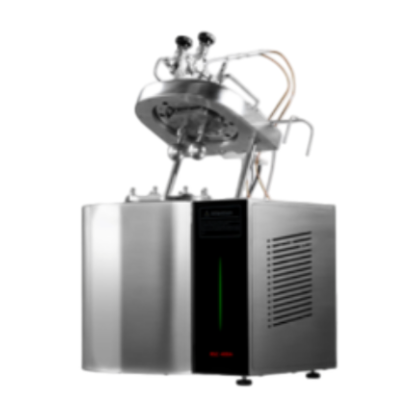
Rapid screening Calorimeter
Category:Other
Factory Direct
Stable Performance
Intl. Standards
Tech Support
Fast Delivery
Global Shipping

Introduction
The rapid – screening calorimeter is a professional calorimetric instrument for the quick assessment of reaction thermal hazards. It supports multiple temperature – scanning modes and can obtain data on heat quantity, pressure, gas production, and venting within a wide temperature range.
Applications
Fine Chemicals | Petrochemicals
Standards
(1)SN/T 3078.1: Standard Sample Management Specifications for Import and Export Commodity Inspection – Part 1: General Provisions
(2)NY/T 3784: Determination of Vanillin, Ethyl Vanillin, Maltol, and Ethyl Maltol in Feed – High Performance Liquid Chromatography
(3)GB 51283: Engineering Design Standard for Raw Material Yards in Iron and Steel Enterprises
Technical Parameters
|
Operating environment |
(5~40)℃, <85%RH |
|
Temperature control range |
Room temperature~400℃ |
|
Rising rate |
(0.5~10)℃/min |
|
Temperature resolution |
0.01℃ |
|
Pressure range |
(0~20)MPa |
|
Pressure resolution |
1kPa |
|
Detection sensitivity |
1%DTBP@6ml Toluene |
|
Sample cell specifications |
8mL |
|
Sample cell material |
Stainless steel, Titanium, Hastelloy (optional) |
|
Interfaces |
RJ45 |
|
Power supply |
AC220V/50Hz |
|
Power |
800W |
|
Dimensions |
310mm*280mm*350mm |
|
Weight |
15.5kg |
Features
(1)Dual – channel design makes testing more efficient and accurate.
(2) It provides large – sample – quantity data and pressure data, which are not available in DSC/DTA (Differential Scanning Calorimetry/Differential Thermal Analysis).
(3) Key components are from well – known international brands, ensuring the long – term and stable operation of the instrument.
(4) It supports constant – temperature mode, scanning mode, and double – gradient scanning mode.
(5)Equipped with professional data – analysis software, it can provide data such as the starting points of temperature/pressure sudden changes, peak temperature/pressure, temperature/pressure rise rates, and reaction heat.
(6)It has an experimental status indication function, as well as overpressure and over – temperature alarm functions.
(7)After the experiment, an inert gas can be introduced to rapidly cool down the furnace body.
(8)The furnace cover has an automatic locking function and can only be opened when the pressure and temperature inside the furnace are within the safe range. 9. With professional industrial design, it is simple and elegant.
Accessoriess
Dual-channel testing components, professional data analysis software, overpressure/overtemperature alarm components, and key supporting components from internationally renowned brands.
Maintenance Information
(1)Routine Inspection: Check all electrical connections, sensors, and sample holders for wear or damage before each use.
(2)Cleaning: Clean the sample chamber, sensors, and surrounding surfaces after each test to remove residues and prevent cross-contamination.
(3)Calibration and Safety Checks: Periodically verify temperature sensors, timers, and measurement accuracy; ensure all safety interlocks and protective covers are functional.
FAQ
1. What is a Rapid Screening Calorimeter used for?
It is used to quickly measure the heat release and thermal behavior of materials, providing essential data for safety assessments and fire risk analysis.
2. Which types of materials can be tested?
The calorimeter can test a variety of solids, powders, and composite materials to evaluate flammability, combustion characteristics, and thermal stability.
3. How does the Rapid Screening Calorimeter work?
The device heats the sample under controlled conditions while measuring heat release, temperature rise, and other thermal parameters, providing rapid screening results.
4. What safety features are included?
It is equipped with emergency stops, protective shields, and interlocks to ensure safe operation during high-temperature testing.
5. How should the Rapid Screening Calorimeter be maintained?
Routine maintenance includes inspecting sensors and electrical connections, cleaning the sample chamber after each test, and periodically calibrating sensors and timers to ensure accurate results.
If you're ready to take the next step, Leave your message below and we'll reply soon. 20+ years of manufacturing & export experience, a partner you can trust.