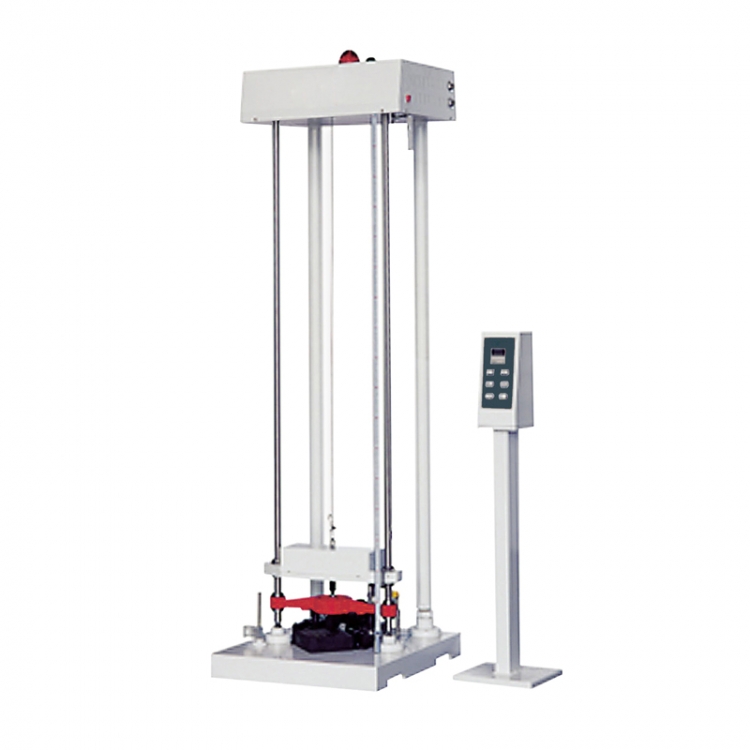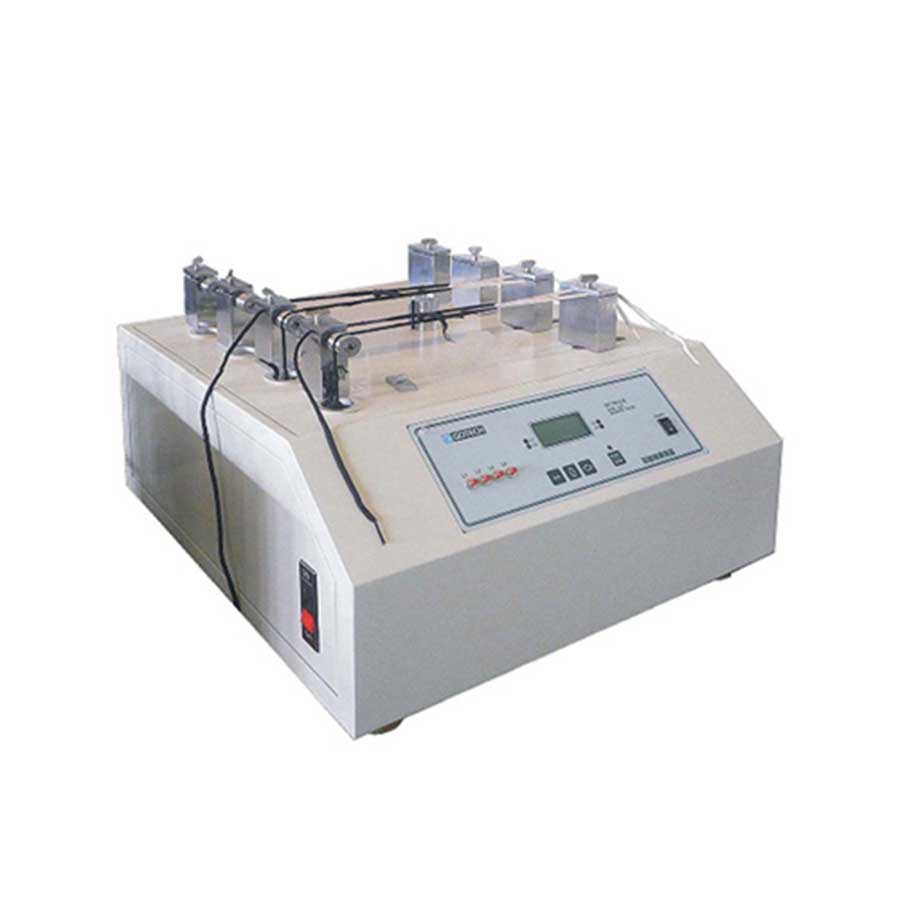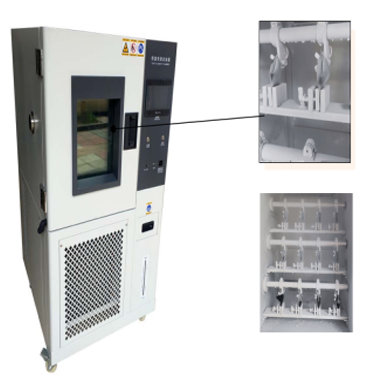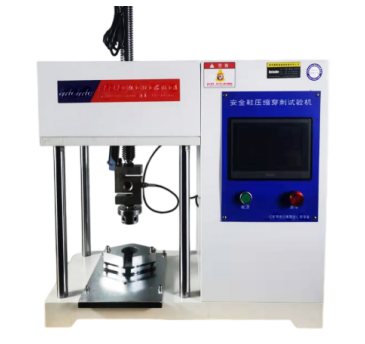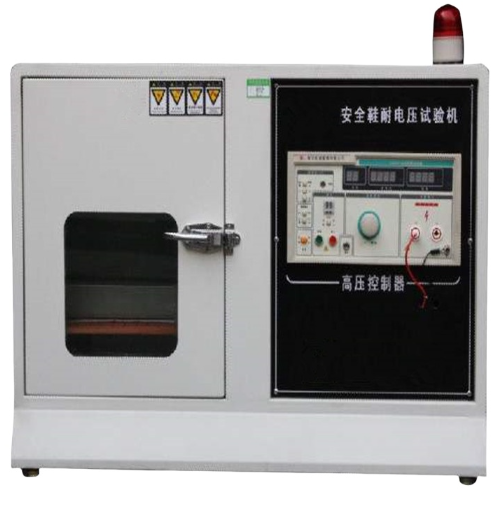
Safety Footwear Electrical Hazard Testing Machine
Category:Footwear Strength Tester
Factory Direct
Stable Performance
Intl. Standards
Tech Support
Fast Delivery
Global Shipping

Introduction
The Safety Footwear Electrical Hazard Tester is designed to evaluate the dielectric strength and electrical insulation performance of safety footwear under specified test conditions. By applying controlled high voltage and monitoring withstand time and leakage behavior, the tester determines whether safety shoes comply with relevant electrical hazard protection requirements. The system is suitable for laboratory verification, type testing, and routine quality control of electrically insulated safety footwear.
Application
(1)Electrical hazard safety shoes for industrial workers used in power generation, electrical maintenance, and live-line operations
(2)Insulated safety footwear for construction sites involving temporary power distribution and electrical equipment installation
(3)Protective shoes for mining operations where electrical insulation is required in humid or conductive environments
(4)Safety boots for petrochemical plants and refineries with combined electrical and explosion-risk conditions
(5)Certified occupational safety footwear submitted for type approval, conformity assessment, and third-party laboratory testing
(6)Quality inspection of finished safety shoes during production and incoming material verification of insulated soles
Standards
(1)GB 12011 — Footwear for Protection Against Electrical Hazards
(2)GB/T 20991 — Personal Protective Equipment – Safety Footwear
(3)ISO 8782-1 — Safety Footwear – Electrical Properties – Test Methods
(4)EN ISO 20344 — Personal Protective Equipment – Test Methods for Footwear
(5)ASTM F2412 — Standard Test Methods for Foot Protection
(6)ASTM F2413 — Standard Specification for Performance Requirements for Protective Footwear
(7)ANSI Z41 — Personal Protection – Protective Footwear
(8)CSA Z195 — Protective Footwear
Parameters
| Item | Specification |
|---|---|
| Control System | PLC programmable control |
| Input Power Supply | AC 220 V |
| Output Voltage | AC 6 kV / AC 20 kV / AC 30 kV (customizable) |
| Rated Capacity | 0.5 kVA |
| Test Frequency | 60 Hz |
| Test Duration | Typically 1 minute (adjustable according to standard) |
| Operation Interface | 7-inch color touch screen (Chinese / English) |
Features
(1)High-voltage output system for controlled dielectric strength testing of safety footwear
(2)PLC-based automatic control for voltage ramp-up, holding time, and test termination
(3)Selectable AC output voltage levels to meet different international standard requirements
(4)Stable high-voltage capacity to ensure repeatable and reliable test results
(5)7-inch color touch screen interface with Chinese and English language options
(6)Integrated safety protection design for high-voltage operation environments
Accessories
(1)Standard safety footwear test electrodes
(2)High-voltage test cables
(3)Operating manual
Maintenance Information
(1)Regularly inspect high-voltage cables and electrodes for insulation integrity.
(2)Keep the control system and touch screen clean and free from dust and moisture.
(3)Perform periodic calibration of voltage output according to laboratory quality procedures.
(4)Ensure proper grounding of the equipment during operation.
(5)Store the tester in a dry environment within the specified operating temperature range.
FAQ
1. What is a Safety Footwear Electrical Hazard Tester?
This device evaluates the electrical insulation performance of safety footwear, ensuring that the shoes protect the wearer from electric shocks in high-voltage or electrically hazardous environments.
2. How does the electrical hazard test work?
The shoe is placed on a conductive platform and subjected to a specified voltage. The tester measures leakage current through the footwear to verify insulation capability.
3. What types of footwear can be tested?
It can test industrial safety shoes, construction boots, and other protective footwear designed for electrical work or environments with potential live circuits.
4. What parameters are measured during testing?
The tester measures leakage current, dielectric breakdown voltage, and insulation resistance to ensure compliance with safety standards.
5. Why is electrical hazard testing important for safety footwear?
Testing ensures shoes provide reliable protection against electric shocks, preventing injuries or fatalities in electrically hazardous environments. Compliance with standards such as ASTM F2413 EH, EN ISO 20345 EH, or CSA Z195 is verified.
If you're ready to take the next step, Leave your message below and we'll reply soon. 20+ years of manufacturing & export experience, a partner you can trust.