Seat Belt Spool Torsion Testing Machine
Category:Torsion Testing Machine
Introduction
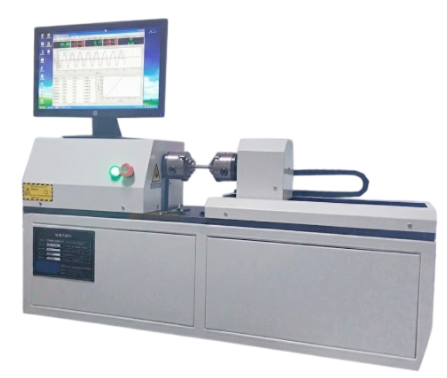
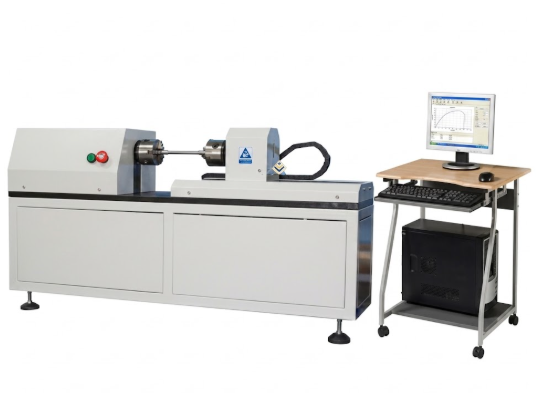
The Seat Belt Spool Torsion Testing Machine is mainly used for torsion testing of automotive components and various parts, including belt pulleys, couplings, connecting parts, connecting rods, spindles, mandrels, tensioners, clutches, shock absorbers, bolts, vehicle-mounted tools, and other components.
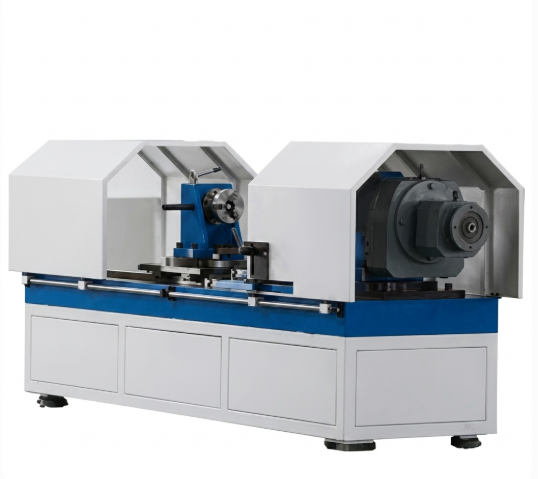
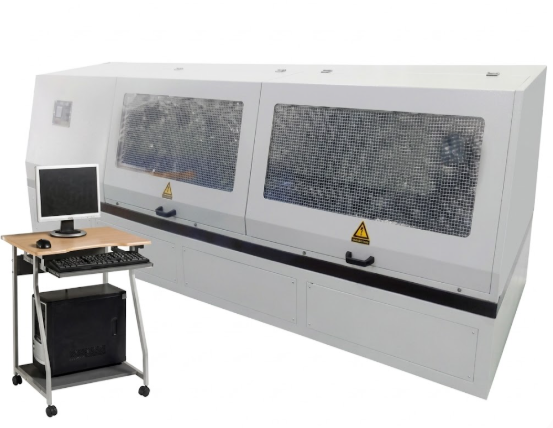
The tested specimen is installed between fixtures with adjustable spacing, allowing the machine to accommodate torsional mechanical performance testing of different specimens. The test bench uses computer-controlled operation and can collect torque, peak torque, angle, curves, and other test data. The display shows torque-time, torsion angle-time, and torque-torsion angle curves. Test data can be stored, retrieved, and printed as test reports.
Application
The Seat Belt Spool Torsion Testing Machine is mainly used for torsion testing of:
(1) Seat belt spools and mandrels
(2) Automotive belt pulleys
(3) Couplings
(4) Connecting parts and connecting rods
(5) Spindles and mandrels
(6) Tensioners
(7) Clutches
(8) Shock absorbers
(9) Bolts
(10) Vehicle-mounted tools
(11) Raw materials, semi-finished components, and finished components
Standards
(1) GB/T 10128-1998 — Metallic Materials—Torsion Test at Room Temperature
(2) GB/T 10128-2007 — Metallic Materials—Torsion Test at Room Temperature
(3) GB/T 2611 — General Requirements for Testing Machines
Test Functions
The machine can perform the following tests:
(1) Torsion angle testing of materials or components
(2) Torque testing of materials or components
(3) Curve analysis of materials or components
(4) Torsion time and speed testing
(5) Maximum torque and peak torque testing
(6) Specified-cycle testing
(7) Constant-torque testing
(8) Destructive testing
(9) Qualification testing
Software Functions
The test software displays torque T, torsion angle θ, and test speed V. The torsion angle can be set for multi-point testing of torque and corresponding angle. The specimen can generally be twisted to fracture to determine one or more torsional mechanical properties.
(1) Windows-Based Chinese Test Software – Used for test data acquisition and processing.
(2) Real-Time Data Processing – Test data can be collected, calculated, processed, displayed, and printed in real time.
(3) Curve Traversal – Individual curve data points can be accessed with the mouse to obtain various test data. The torque-angle curve can show the torque-angle relationship at any point, with local curve areas available for enlargement and restoration.
(4) Manual or Automatic Zeroing – The torque and angle measurement channels can be manually or automatically zeroed as required.
(5) Automatic Data Storage – Test conditions and test data are automatically stored and can be retrieved when needed.
(6) Batch Testing – After test conditions are set, a batch of specimens can be tested successively. Test conditions, specimen parameters, test data, and results can be stored and recalled for subsequent tests.
(7) Test Report Printing – Detailed test reports can be printed.
Parameters
| Parameter | Specification |
|---|---|
| Machine Type | Horizontal |
| Testing Machine Class | Class 1 |
| Accurate Measurement Range | 1% FS–100% FS |
| Torque Indication Error | Better than ±1% |
| Torque Repeatability Error | Better than 1% |
| Angle Resolution | 0.01° |
| Angle Measurement Accuracy | Better than ±1% |
| Torsion Fixtures | Three-jaw chuck type, bidirectional top-tightening type |
| Test Travel | 300 mm or 500 mm, can be increased |
| Torsion Speed Control Range | 0.01–5 R/min, stepless speed adjustment |
| Torsion Speed Control Accuracy | Better than ±1% |
| Appearance | Complies with GB/T 2611 requirements |
| Completeness | Complies with standard requirements |
| Protection Function | Overload protection |
| Power Supply | 220 V, 50 Hz |
Features
(1) Automotive Component Testing – Suitable for torsion testing of seat belt spools and various automotive components.
(2) Adjustable Fixture Space – The spacing between fixtures can be adjusted according to different specimen dimensions.
(3) Multiple Test Functions – Supports torque, torsion angle, peak torque, speed, curve analysis, specified-cycle, constant-torque, destructive, and qualification testing.
(4) Computer-Controlled Operation – The system collects and processes test data through Windows-based test software.
(5) Real-Time Curve Display – Torque-time, torsion angle-time, and torque-torsion angle curves can be displayed during testing.
(6) Batch Testing – Multiple specimens can be tested consecutively using stored test conditions.
(7) Automatic Data Storage – Test conditions, specimen parameters, test data, and results can be stored and recalled.
(8) Overload Protection – The testing machine is equipped with an overload protection function.
If you're ready to take the next step, Leave your message below and we’ll reply soon. 20+ years of manufacturing & export experience, a partner you can trust.