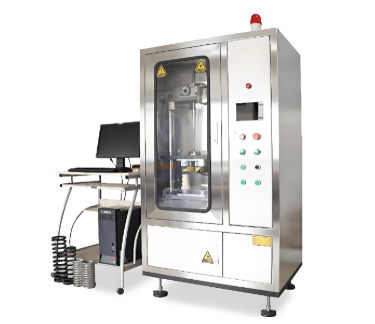
Shock Absorber Performance Testing Bench
Category:Torsion Testing Machine
Factory Direct
Stable Performance
Intl. Standards
Tech Support
Fast Delivery
Global Shipping

Introduction
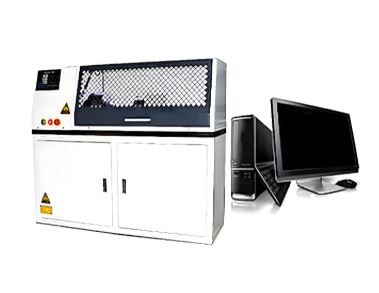
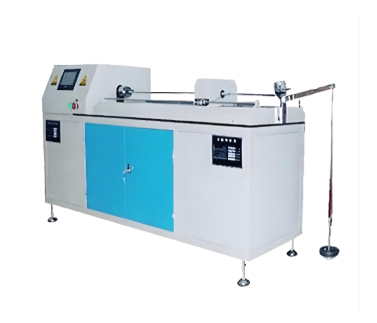
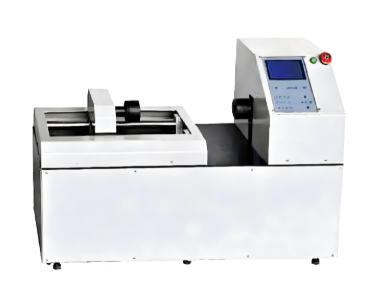
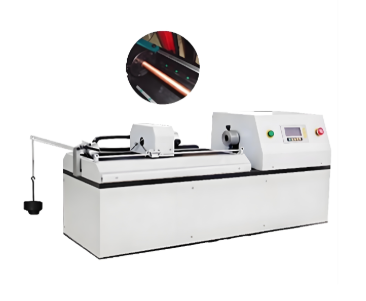
The Shock Absorber Performance Testing Machine is mainly used for dynamic and static performance testing of cylindrical shock absorbers and springs used in passenger cars, special-purpose vehicles, commercial vehicles, armored vehicles, electric vehicles, motorcycles, and other motor vehicles.The machine can perform tests including force-displacement characteristics, velocity characteristics, fatigue life, damping performance, friction performance, and other mechanical properties. It is a cost-effective testing system widely used for shock absorber development, quality inspection, and production control.The equipment features a reasonable structure, simple and reliable operation, accurate and convenient adjustment of test space and stroke, easy specimen installation, stable operation, and convenient maintenance.
Structure
The main unit consists of a frame, mechanical loading system, transmission mechanism, and other components. The frame includes columns, worktable, excitation table, upper crossbeam, screw lifting mechanism, and base. These components are integrated and securely installed on the base to ensure structural stability.
The tested shock absorber is installed between the excitation table and worktable through dedicated fixtures. The test requirements for different specimen sizes can be met by adjusting the amplitude, while different mounting methods can be accommodated by replacing the fixtures.
Applicable Standards
GB/T 1239.2 — Technical Specifications for Cold Coiled Helical Compression Springs
GB/T 1239.4 — Technical Specifications for Cold Coiled Helical Springs: Torsion Springs
GB/T 19844 — Technical Requirements for Springs Used in Mechanical Applications
QC/T 545 — Bench Test Method for Automotive Shock Absorbers
GB/T 18258 — Test Methods for Automotive Suspension Shock Absorbers
ISO 10844 — Acoustics — Specification of Test Tracks for Vehicle Noise Measurement (related vehicle testing environment)
ISO 9227 — Corrosion Tests in Artificial Atmospheres (applicable for durability-related evaluations when combined with environmental testing)
Main Technical Specifications
| No. | Item | Technical Parameters |
|---|---|---|
| 1 | Maximum Test Force | 1 kN, 5 kN, 10 kN, 20 kN, 50 kN, 100 kN, 200 kN, 300 kN, 500 kN |
| 2 | Test Frequency | 0.5–50 Hz |
| 3 | Maximum Test Stroke | 600 mm |
| 4 | Maximum Linear Velocity for Force-Displacement Testing | 5 m/s |
| 5 | Sensor Measurement Accuracy | ±0.5% FS |
| 6 | Counter Capacity | 9 × 10⁹ |
| 7 | Counting Stop Accuracy | ±1 |
| 8 | Maximum Specimen Outer Diameter | Dedicated fixtures can be customized |
| 9 | Installation Stations | 1 station (multi-station design available) |
| 10 | Maximum Specimen Length | 800 mm (Customizable) |
| 11 | Power Supply | 220 V / 380 VAC, 50 Hz |
| 12 | Main Motor Power | 15 kW |
Main Features
Adjusts the spring amplitude and test frequency according to the technical requirements of the spring.
Equipped with an LCD Chinese character display; test cycles and frequency can be preset through the program for automatic operation.
Automatically stops when the preset number of test cycles is reached.
The motor and reducer drive the cam mechanism, which moves the connecting rod reciprocally to achieve repeated compression movement of the spring.
Simple operation, reliable performance, and stable running.
If you're ready to take the next step, Leave your message below and we'll reply soon. 20+ years of manufacturing & export experience, a partner you can trust.