Shoe Peeling Strength Tester
Category:Footwear Strength Tester

Introduction
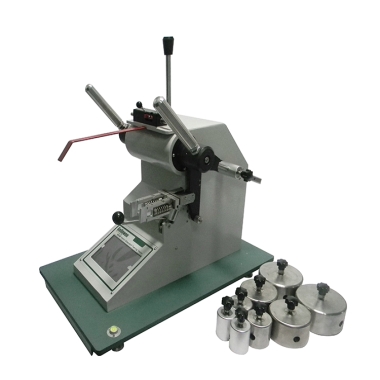
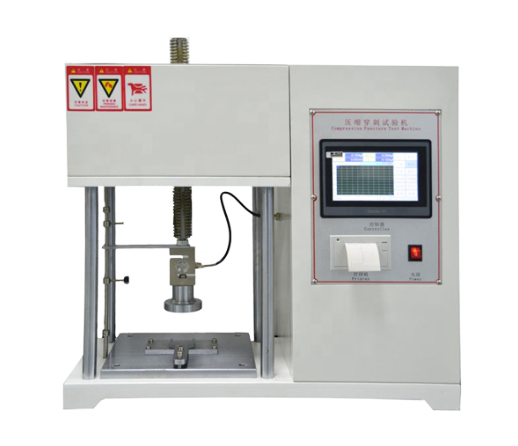
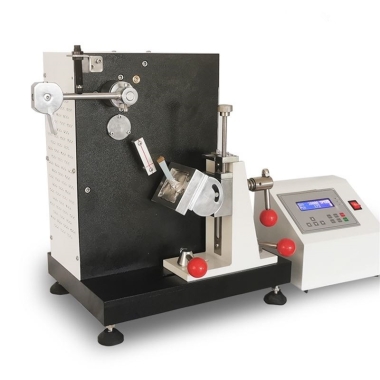
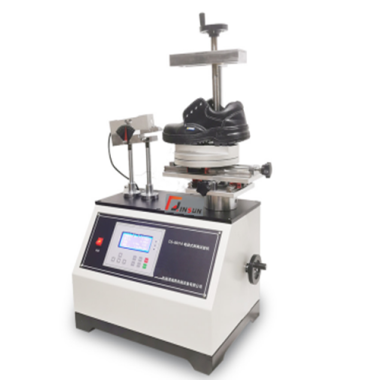
The Shoe Peeling Strength Tester is designed to evaluate the adhesive bond strength between the shoe upper and sole. By simulating the peeling process under controlled conditions, the tester measures the force required to separate the sole from the upper, providing quantitative data on the bonding quality and durability of finished footwear.
Applications
(1)Testing the peeling strength of athletic shoes, safety shoes, casual shoes, and leather footwear.
(2)Quality control in footwear manufacturing to ensure reliable sole-to-upper adhesion.
(3)Research and development of adhesives and bonding processes for shoe production.
(4)Evaluation of different sole materials, including rubber, EVA, PU, and leather.
(5)Assessment of complete shoes under simulated real-world peeling conditions.
(6)Verification of compliance with industry standards for whole shoe bonding performance.
(7)Comparative testing of different shoe construction methods (cemented, vulcanized, or stitched).
Standards
(1)GB/T 15107-2013 — Footwear — Determination of Bonding Strength Between Upper and Sole
(2)GB/T 3903.3-2011 — Leather Footwear — Part 3: Adhesion Strength of Upper to Sole
(3)BS 20344 — Test Methods for Footwear — Determination of Bond Strength
(4)QB/T 4329-2012 — Footwear Industry Standard for Peeling Strength
(5)QB/T 1002-2015.6.5 — Rubber and Plastic Footwear Adhesion Test
Technical Parameters
| Item | Parameters |
|---|---|
| Peeling Force | 1000 N |
| Peeling Knife Width | 20 ± 0.2 mm, 10 ± 0.1 mm |
| Knife Edge Down Speed | 20 ± 2 mm/min, adjustable rise/fall speed |
| Positioning Rod/Tie Rod Spacing | 50–70 mm adjustable |
| Dial Gauge | 0.001–10 mm, accuracy 0.001 mm |
| Average Lifting Range | 40 mm |
| Dimensions (L×W×H) | 560 × 320 × 750 mm |
| Power Supply | AC 220V, 50Hz, single-phase |
| Weight | 45 kg |
Features
(1)Shoe last clamp or universal fixture designed to securely hold the shoe during testing.
(2)Peeling knife with interchangeable widths (20 ± 0.2 mm and 10 ± 0.1 mm) to initiate controlled separation of sole and upper.
(3)Electric motor and control system for precise downward movement of the peeling knife at adjustable speeds.
(4)Integrated force sensor/load cell to accurately measure peeling force.
(5)Automatic calculation of peeling strength based on force and knife width.
(6)Adjustable positioning rod and tie rod spacing (50–70 mm) to accommodate different shoe sizes.
(7)Dial gauge (0.001–10 mm range, 0.001 mm accuracy) to monitor peeling displacement.
(8)Average lifting range of 40 mm to allow full separation measurement.
(9)Robust construction suitable for finished footwear testing.
(10)AC 220V power supply for reliable operation.
Accessories
(1)Peeling knives (20 mm and 10 mm widths)
(2)Adjustable shoe last clamps
(3)Dial gauge for displacement measurement
Maintenance Information
(1)Keep the peeling knife and clamping system clean and free of adhesive residues.
(2)Regularly inspect the force sensor and dial gauge for accuracy.
(3)Lubricate moving components to maintain smooth operation.
(4)Check and tighten fixtures and bolts periodically.
(5)Store the tester in a dry, stable environment to prevent corrosion and mechanical wear.
If you're ready to take the next step, Leave your message below and we’ll reply soon. 20+ years of manufacturing & export experience, a partner you can trust.