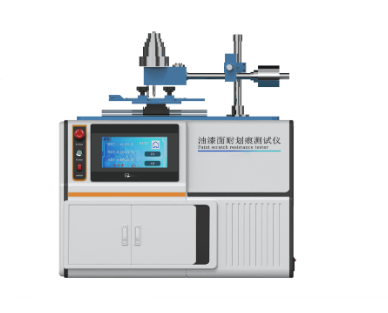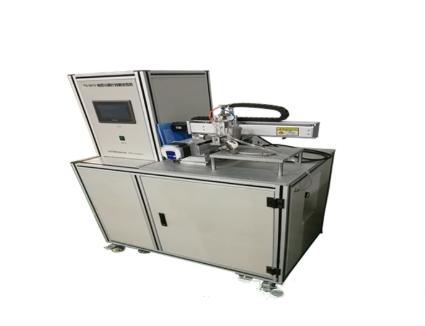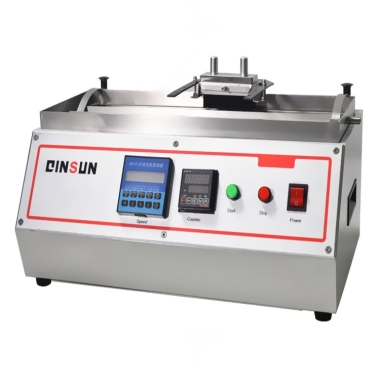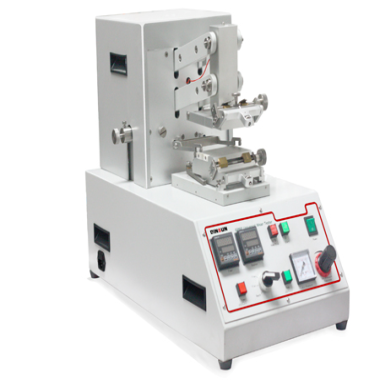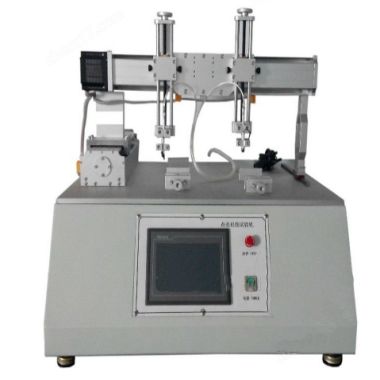
Touch Screen Tap-and-Scratch Durability Tester
Category:Scratch Tester
Introduction
The Touch Screen Tap-and-Scratch Durability Tester is a dedicated life-cycle testing system for evaluating the tapping and scratching durability of mobile phone touch screens and similar display surfaces. The instrument simulates real user interaction by repeatedly tapping or sliding a stylus (or equivalent rubber tip) across the screen under controlled force, speed, and trajectory. By presetting test cycles and motion paths, the system assesses the screen’s resistance to wear, scratching, and functional degradation caused by long-term touch operations.
Application
Primary applications
Durability testing of mobile phone touch screens
Repeated tapping life test of capacitive displays
Scratch and sliding wear evaluation of touchscreen surfaces
Functional reliability verification after mechanical interaction
Typical tested products
Smartphone touch screens
Tablet displays
Touch-enabled panels and modules
Industrial touch terminals
OLED and LCD touch display assemblies
Standards
(1) GB/T 4208-2017 – Degrees of protection provided by enclosures (IP Code)
(2) SJ/T 11342-2015 – General specification for touch screens
(3) SJ/T 11467-2014 – General specification for capacitive touch screens
(4) ISO 6508 / ISO 14577 – Surface hardness and micro-damage evaluation
(5) IEC 62341 (OLED series) – Reliability evaluation reference for display devices
(6) IEC 60068-2 series – Environmental and mechanical endurance testing for functional verification
Parameters
| Item | Specification |
|---|---|
| Test stations | 2 stations |
| Travel range | X-axis: 800 mm; Y-axis: 400 mm |
| Movement speed | 0–300 mm/s (adjustable) |
| Counter | 6-digit counter with power-off memory |
| Control system | PLC controller + touch screen interface |
| Cylinder force | Adjustable from 100–500 gf |
| Standard weights | 50 g ×2. 100 g ×2. 200 g ×2 |
| Motor torque | 1.3 N·m |
| Motion patterns | Rectangle, triangle, straight line, diagonal, etc. |
| Machine size | W950 × D650 × H510 mm |
| Power supply | 220 V / 3 A |
Features
PLC control with user-friendly touch screen operation.
Automatic cycle counting with power-off memory retention.
Precisely adjustable tapping force via pneumatic cylinder (100–500 gf).
Programmable movement speed and travel range.
Multiple selectable drawing trajectories to simulate real usage.
Cumulative life-cycle counting with automatic shutdown at preset cycles.
Dual-station design improves testing efficiency and sample throughput.
Accessories
(1) Standard weight set: 50 g ×2. 100 g ×2. 200 g ×2
(2) Stylus/rubber test tips (handwriting pen or equivalent material)
(3) User manual
Maintenance Information
Keep the stylus tip clean and replace it if worn or damaged.
Regularly check the cylinder pressure and air supply stability.
Clean guide rails and motion components to avoid dust interference.
Avoid overloading beyond specified force range.
Perform periodic calibration of movement speed and force output.
FAQ
1. What is the core advantage of this product?
It accurately simulates real touch interactions with controllable force, speed, and motion paths, enabling reliable evaluation of touchscreen durability under repeated use.
2. Are the test results reliable?
Yes. PLC control, stable motor drive, precise force regulation, and programmable motion ensure repeatable and consistent test conditions.
3. Which international/industry standards does it comply with?
It supports evaluation in reference to GB/T 4208. SJ/T 11342. SJ/T 11467. ISO 6508/14577. IEC 62341. and IEC 60068-2 series standards.
4. Why is this product important?
Touchscreen durability directly affects product lifespan, user experience, and reliability. This tester provides quantitative data for design validation, quality control, and product certification.
5. Which fields is this product suitable for?
Mobile phone manufacturers
Display module suppliers
Consumer electronics R&D laboratories
Third-party testing and certification bodies
Quality control departments in electronics manufacturing