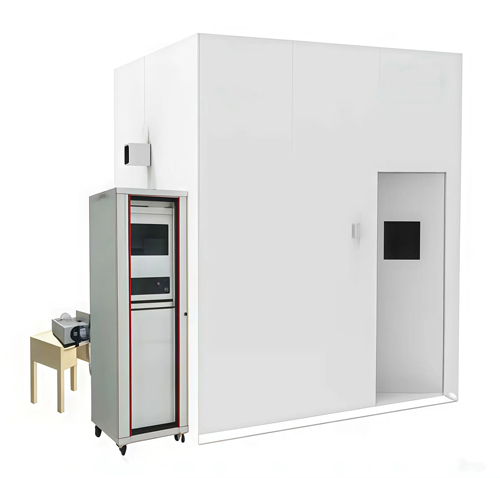
Wire and Cable Smoke Density Tester
Category:Flammability Tester
Introduction
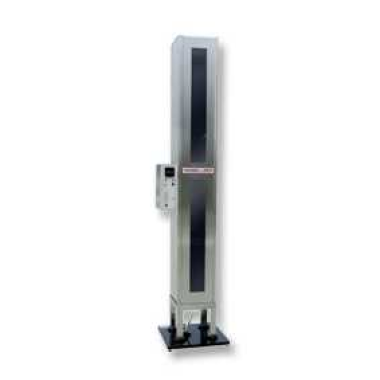
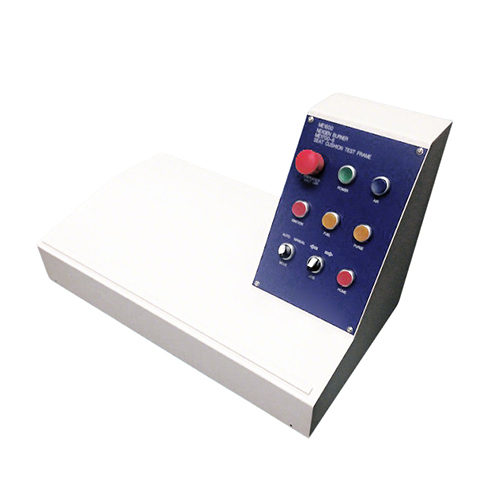
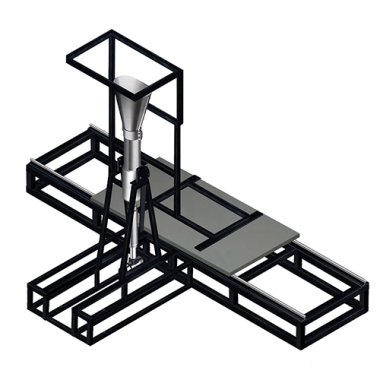
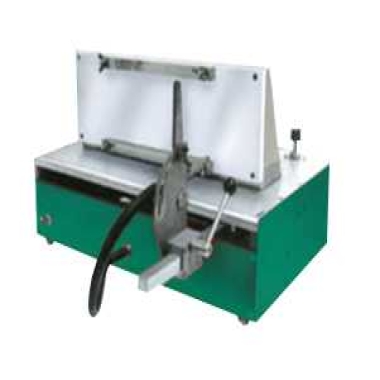
The Wire and Cable Smoke Density Tester tests smoke density grades of plastics, non-metallic materials in rail transit/ships, and wire/cable products, following standards like ASTME662. It offers more accurate results with a sophisticated optical sensor. Paired with other devices, it can conduct aviation smoke toxicity tests and smoke composition analysis.
Application
Material Evaluation: Suitable for smoke density testing of various materials, including plastics, rubber, textiles, and wood, and widely used in quality control of wires, cables, optical fibers, and insulating materials.
Safety Protection: By quantifying smoke concentration (such as specific optical density Ds), it provides a safety basis for cable selection in enclosed spaces such as subways, tunnels, and high-rise buildings, reducing the risk of “secondary disasters” in fires.
Research and Production: Serves the plastics industry, solid material manufacturing plants, and research institutions for the research and verification of material combustion performance.
Standard
ASTM American Society for Materials and Testing: ASTME662. ASTMF814
BS British Standards Institut: BS6401:1983
DIN German Standards Association: DIN5510-2
IS0 International Organization for Standardization: ISO5659-2:2012
EN Euro M standard :CSNEN45545-2+A1:2015
IMO International Maritime Organization: IMO FTPC Part 2
GB China standard: GB/ T8233:2008
NES British Naval Engineering : NES711
NFPA National Fire Protection Association: NFPA 258
Specification
| Item | Dimensions |
| Dimensions | 3.450(W) × 3.160(D) × 3.450(H)mm |
| Workbench Dimensions | 600(W) × 750(D) × 1.600(H)mm |
| Power Supply | AC 220V, 50/60Hz, 20A |
| Weight | 2.500kg |
| Total Ventilation Area | 50cm² ± 10cm² |
| Instructions | Includes |
| Tools | Computer, compressed air, vacuum cleaner |
Features
The enclosure consists of a cubic shell with dimensions of 3000mm ± 30mm (length, width, and height). The internal material of the enclosure is SUS 304 stainless steel, filled with calcium silicate fireproof material, and the exterior is made of iron with powder coating;
All internal fixtures are made of stainless steel; aesthetically pleasing and corrosion-resistant;
The total area of the ventilation holes is 50cm² ± 10cm², and they remain open throughout the test; the baffle height is 1000mm;
Equipped with wire and cable test racks and weights as required by the standard.
The test chamber door has glass observation windows on opposite sides, fitted with sealed transparent windows (minimum 100mm x 100mm) that allow light from the horizontal optical measurement system to pass through. These windows are located 2150mm ± 100mm above the ground;
The photocell and light source are positioned at the center of the windows on each of the two walls, without physical contact.
Parameters
| Technical Parameter | Details |
|---|---|
| Operating Voltage | AC 220 V ± 10%, 50HZ |
| Light Source Voltage | DC 12V |
| Power | 2000W |
| Ambient Temperature | 25℃ ± 5℃ |
| Nominal Luminous Flux | 2000lm ~ 3000lm |
| Nominal Color Temperature | 2800K ~ 3200K |
| Air Flow Rate | ≥ 2L/min |
| Fire Supply Time | Standard time 40min (settable) |
| Timing Accuracy | ≤ 0.5s for 40min |
| Calibration Value | 100% (transmittance) |
Test Procedures
Sample Preparation: Cut a cable or optical fiber sample of the specified length (e.g., ≥1 meter) according to the standard, and condition it at 23℃±5℃ for at least 16 hours.
Equipment Calibration: Calibrate the optical system using filters with different transmittances (e.g., 100%, 75%, 25%) to ensure data accuracy.
Sample Installation: Secure the sample horizontally on the support inside the combustion chamber, adjusting its position so that the distance between the lower surface of the sample and the bottom of the alcohol tray is 150mm±5mm.
Environmental Setup: Measure the temperature inside the combustion chamber door at a height of 1.5m-2.0m from the ground and at least 0.2m from the wall to ensure it is within the range of 25℃±5℃; if necessary, preheat the combustion chamber with a blank test.
Test Start: Ignite the alcohol tray fire source, close the combustion chamber door, and start the fan to ensure even distribution of smoke; the test ends when the fire source is extinguished after 5 minutes or after 40 minutes of testing, whichever comes first, or when the transmittance no longer decreases.
Record Results: Read and record the minimum transmittance (Tmin) during the test, and calculate parameters such as specific optical density (Ds).
Equipment Cleaning: After the test, clean the combustion residue and keep the chamber clean.
If you're ready to take the next step, Leave your message below and we’ll reply soon. 20+ years of manufacturing & export experience, a partner you can trust.