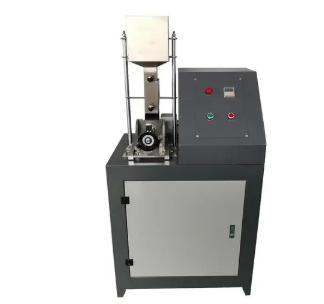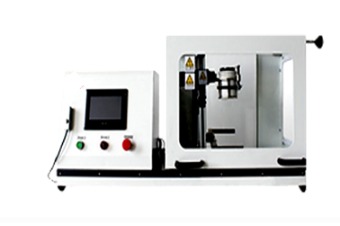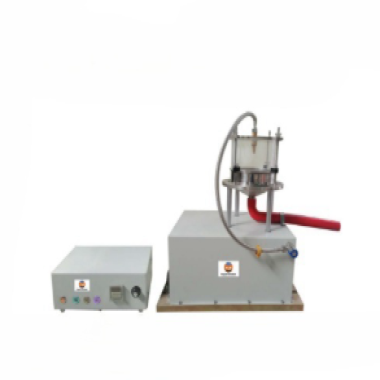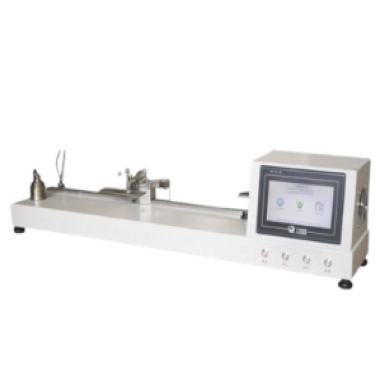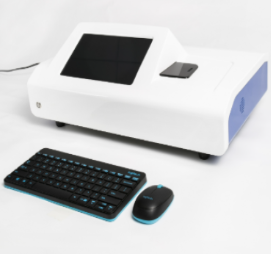
The near-infrared spectroscopy analyzer for textile fiber components
Category:Other
Introduction
Introduction
The Near-Infrared Spectroscopy Analyzer for Textile Fiber Components is an advanced instrument designed for the rapid qualitative and quantitative analysis of textile materials. It supports non-destructive testing and enables users to identify and evaluate fiber compositions with exceptional speed, stability, and accuracy. With a full-wavelength detection range and built-in chemometric modeling software, the analyzer has become an efficient solution for textile enterprises, laboratories, and inspection agencies seeking high-performance fiber analysis.
Applications
This analyzer is suitable for a wide range of textile materials, including natural fibers, synthetic fibers, blended fabrics, and powdered fiber samples. It is widely used in textile manufacturing, quality inspection centers, research institutes, fiber trading companies, and garment testing laboratories.
Typical applications include fiber composition identification, blend ratio analysis, raw material quality control, fast screening of incoming materials, and compliance verification for fiber labeling requirements.
Standards Compliant
The instrument supports rapid analysis related to internationally recognized textile fiber identification and quantitative analysis standards. It assists users in achieving compliance with:
Chinese Standards (GB/T):
GB/T 2910 Textile — Quantitative Chemical Analysis
GB/T 16988 Identification of Fiber Content in Textile Products
GB 18401 National General Safety Technical Code for Textile Products
FZ/T 01095 Fiber Blend Ratio — Near-Infrared Spectroscopy Method
International Standards (ISO):
ISO 1833 Textiles — Quantitative Chemical Analysis
ISO 2076 Man-made Fibres — Generic Names
ISO 19961 Textiles — Identification of Fibres — Near-Infrared Spectroscopy Method
American Standards (AATCC):
AATCC 20 Fiber Analysis: Qualitative
AATCC 20A Fiber Analysis: Quantitative
These standards ensure accuracy and traceability for fiber content evaluation and labeling compliance.
Test Capabilities
The analyzer can perform both qualitative and quantitative testing, including:
Identification of natural fibers such as cotton, wool, silk, flax
Identification of synthetic fibers such as polyester, nylon, acrylic, spandex
Quantitative analysis of blended textiles (e.g., cotton/polyester, wool/polyamide, viscose/polyester)
Measurement of multi-component fiber mixtures
Fast prediction of physical and chemical property indicators using modeling
Simultaneous detection of multiple component indicators in a single test
Advantages
This analyzer offers several key advantages beneficial to textile enterprises and testing institutions.
Non-destructive testing
Near-infrared light directly irradiates the sample without the need for pretreatment, preserving sample integrity.
High-speed analysis
A single spectrum scan can be completed within milliseconds, and full analysis is completed in just 22 seconds.
Resource-saving
No chemical reagents or consumables are required, reducing detection costs and eliminating waste disposal concerns.
Environmentally friendly
No toxic or corrosive chemicals are used, avoiding secondary environmental pollution.
Simultaneous qualitative and quantitative analysis
Chemometric models provide comprehensive multi-factor detection in one step.
Stable and reliable
The AOTF spectroscopic principle ensures no mechanical vibration, improving long-term stability and accuracy.
Limitations
Although highly efficient, users should be aware of certain limitations.
Near-infrared analysis depends on high-quality modeling data, especially for complex blended fabrics
Accuracy may vary for uncommon fiber types if model libraries are not established
Sample conditions such as moisture content or surface contamination can influence results
Operating Precautions
To ensure optimal performance, users should follow the guidelines below.
Keep the instrument in a clean and stable environment within the recommended temperature and humidity range
Ensure the sample surface is clean and free from oil, moisture, or visible contamination
Use the rotatable sampling cup properly for powder and whole samples
Avoid strong ambient light interference during testing
Perform routine calibration checks and follow system prompts for automatic calibration
Do not attempt to disassemble or modify internal components
Frequently Asked Questions (FAQ)
1. Can the analyzer detect all types of textile fibers?
It can detect most natural and synthetic fibers commonly used in the textile industry. For rare or specialty fibers, corresponding models must be established.
2. Does it require chemical reagents for testing?
No. The analyzer performs fully non-destructive testing without any chemical reagents or consumables.
3. How long does a complete test take?
The analysis can be completed in approximately 22 seconds, depending on the sample type.
4. Can the instrument analyze blended fabrics?
Yes. It supports quantitative analysis of two-component and multi-component blended fabrics by using chemometric prediction models.
5. Does the software require manual upgrades?
No. The software includes lifetime free upgrades, and the system automatically performs updates when connected to a network.
We are a professional manufacturer of laboratory testing instruments, providing complete testing solutions for textile industries worldwide. If you need reliable, high-performance fiber analysis equipment, feel free to contact us for customized support.