Textile thermal resistance tester
Category:Other
Introduction
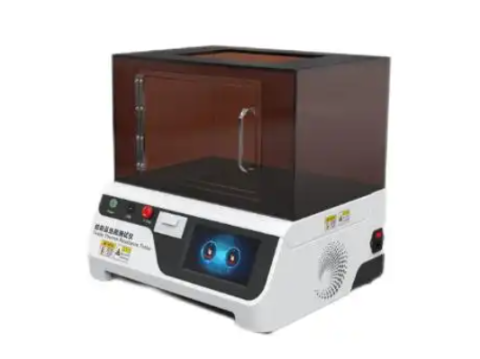
The Textile Thermal Resistance Tester measures the ability of textiles to resist heat transfer, providing the thermal resistance value. It simulates the heat exchange process between the human body and the environment. The principle is based on the three fundamental modes of heat transfer: conduction, convection, and radiation. By controlling temperature difference and airflow conditions, the tester monitors temperature changes on both sides of the textile sample to calculate thermal resistance.
The instrument typically consists of a constant-temperature heat source (simulating the human body), a cooling plate (simulating the external environment), and a sample clamped between them. Heat from the source is conducted through the textile to the cooling plate. Simulated airflow creates a realistic heat exchange environment, while high-precision sensors record temperature changes. Data is then processed using specialized algorithms to calculate the textile’s thermal resistance.
Applicable Standards
ISO 11092:2014 – Textiles – Measurement of thermal and water-vapor resistance under steady-state conditions (sweating guarded hotplate test).
ASTM F1868-17 – Standard Test Method for Thermal and Evaporative Resistance of Clothing Materials Using a Heated Manikin.
EN 31092 – Protective clothing – Measurement of thermal resistance.
Product Features
Simulates human body heat and environmental conditions accurately.
Measures thermal resistance under controlled temperature differences and airflow conditions.
High-precision sensors ensure accurate data collection.
Supports both steady-state and dynamic testing methods.
Data processing and algorithm-based calculations for precise thermal resistance results.
Compact and ergonomic design suitable for lab and industrial use.
Technical Parameters
| Specification | Details |
|---|---|
| Heat Source | Constant-temperature plate simulating human body heat |
| Cooling Plate | Simulates external environment |
| Sample Size | Variable, depending on clamp dimensions |
| Temperature Control | ±0.1°C accuracy |
| Airflow Control | Adjustable to simulate natural or forced convection |
| Measurement Mode | Continuous temperature recording on both sides of the textile |
| Data Output | Thermal resistance value (m²·K/W) calculated automatically |
| Power Supply | AC 220V ±10%, 50Hz |
FAQ
1. What types of textiles can be tested?
The tester is suitable for all types of textile materials, including woven, knitted, and nonwoven fabrics.
2. How is the thermal resistance value calculated?
By monitoring temperature changes across the sample under controlled conditions and applying specialized heat transfer algorithms.
3. Can the tester simulate different environmental conditions?
Yes, airflow and temperature difference can be adjusted to simulate natural wind or human activity conditions.
4. What is the accuracy of the temperature measurement?
The tester features high-precision sensors with ±0.1°C temperature accuracy.
5. Is the data automatically processed?
Yes, the instrument calculates the thermal resistance value automatically and provides easy-to-read results.