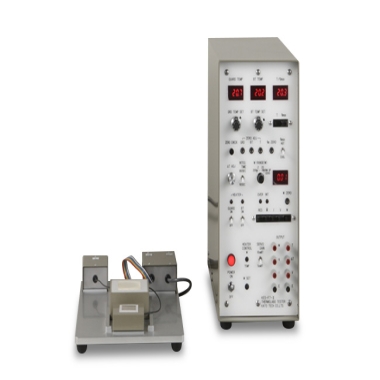
contact heating and cooling tester
Category:Other
Introduction
Product Overview
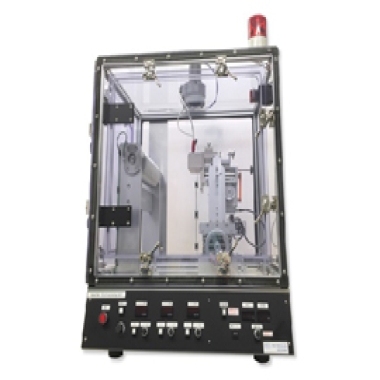
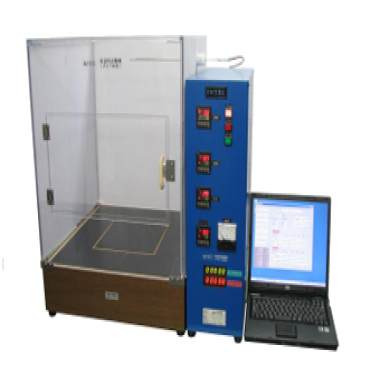
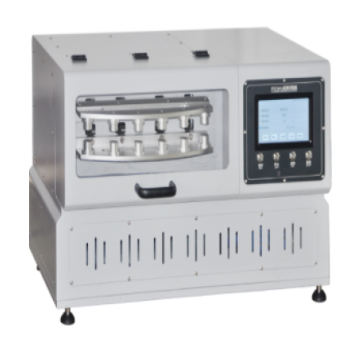
The Contact Heating and Cooling Tester is a precision instrument designed to measure the “contact cold and heat sensation” of fabrics. This sensation is perceived by the skin when touching textiles, depending on the heat transfer between the skin and the fabric. The instrument primarily evaluates q max (peak heat flow), an index widely used to assess cool and warm sensations of textiles.
It is especially suitable for testing:
Summer bedding and pajama fabrics for cooling sensation
Winter underwear and thermal fabrics for warm sensation
Key Features
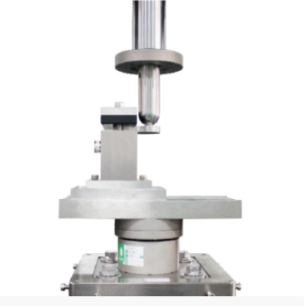
Human-like Contact Simulation: The hot plate’s load and contact area are designed to mimic the feeling of human skin touching the fabric, enabling accurate measurement of peak heat flux.
Thermal Conductivity Measurement (Optional): Measures heat transfer between two hot plates set at 30°C and 20°C, reflecting the fabric’s thermal conductivity.
Insulation Measurement (Optional): Assesses the insulation performance of fabrics. The sample is placed on a hot plate (room temperature +10°C) and exposed to air at a fixed wind speed. Heat loss is calculated to determine the insulation rate (%).
Dry and Wet Methods:
Dry method: Simulates direct skin-to-clothing contact in dry conditions.
Wet method: Simulates sweating conditions, accounting for moisture on the skin.
Applications
Textile Testing: Pajamas, underwear, thermal clothing, and bedding fabrics.
Product Development: Evaluating fabric heat transfer properties for comfort optimization.
Research: Studying thermal behavior of textiles under different environmental and contact conditions.
Technical Parameters
| Parameter | Specification |
|---|---|
| Test Principle | Measurement of peak heat flow (q max) |
| Sample Type | Fabrics, textiles for clothing and bedding |
| Contact Simulation | Hot plate designed to mimic human skin contact load and area |
| Thermal Conductivity | Optional; heat transfer between hot plates at 30°C and 20°C |
| Insulation | Optional; calculated from heat loss at fixed wind speed |
| Measurement Method | Dry and wet (sweating simulation) |
| Environmental Conditions | Room temperature, controllable wind speed for insulation tests |
| Output | Digital display of q max, thermal conductivity, and insulation rate |
FAQ
1. What does “q max” measure?
Q max is the peak heat flow from the skin to the fabric when contact occurs. It indicates how warm or cool a fabric feels to the skin.
2. Can this tester simulate sweating?
Yes, using the wet method, the instrument accounts for moisture on the skin to simulate heat transfer during sweating.
3. What types of fabrics can be tested?
It is suitable for bedroom fabrics, pajamas, underwear, thermal wear, and other textiles where human skin comfort is critical.
4. Can the instrument measure both insulation and thermal conductivity?
Yes, both measurements are optional. Thermal conductivity evaluates heat transfer between hot plates, and insulation assesses heat retention of the fabric under airflow.
5. Is this suitable for both summer and winter fabric testing?
Yes, it measures cool sensation for summer fabrics and warm sensation for winter fabrics, providing comprehensive thermal comfort assessment.