Battery Adiabatic Calorimeters
Category:Battery Performance Tester
Factory Direct
Stable Performance
Intl. Standards
Tech Support
Fast Delivery
Global Shipping

Introduction
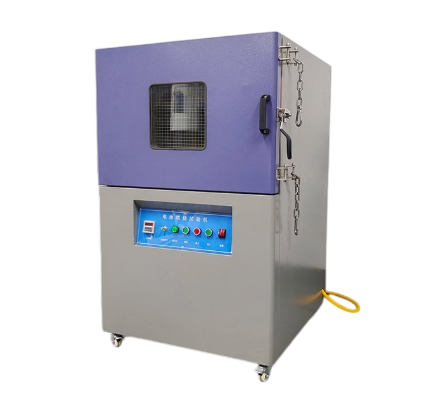
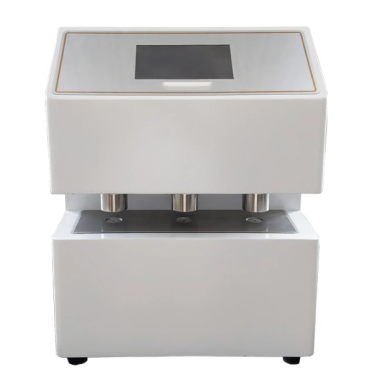
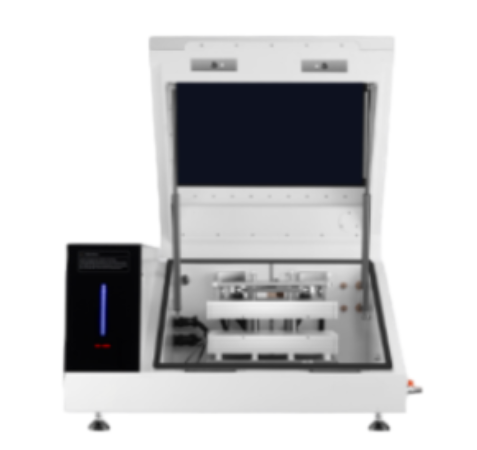
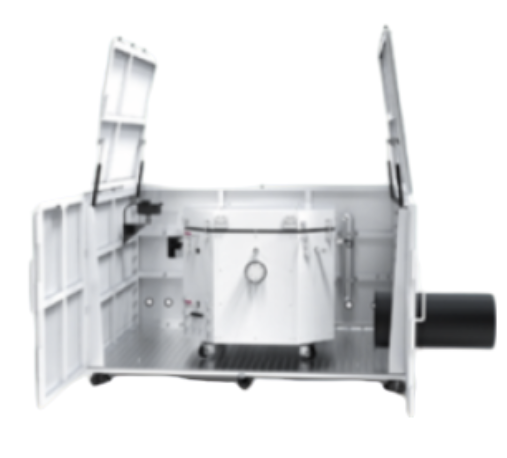
Battery adiabatic calorimeters play a crucial role in battery research and development, providing essential thermodynamic data for safety assessment, performance optimization, energy efficiency analysis, and lifespan prediction.
Application
Battery adiabatic calorimeters are widely used in the research, testing, and safety evaluation of batteries and battery packs. They can provide thermal characteristic data of batteries during charging and discharging processes, offering crucial support for battery design and optimization. These instruments play a key role in battery thermal safety assessment, thermal management system performance evaluation, and material thermal safety testing.
Standards
(1)GB/T 36276 – 2023: Lithium-ion Batteries for Electric Power Energy Storage
(2)UL 9540A: Test Method for Evaluating Thermal Runaway Fire Propagation in Battery Energy Storage Systems
(3)ASTM E1981 – 98(2012): Standard Test Method for Thermal Stability of Chemicals by Differential Scanning Calorimetry (DSC)
(4)SN/T 3078.1 – 2012: Guidelines for the Evaluation of Thermal Stability of Chemicals – Part 1: Accelerated Calorimetry Method
(5)USABC SAND99 – 0497: This is a specific test protocol document from the United States Advanced Battery Consortium (USABC), and it doesn’t have a widely recognized single “English name” in the same sense as formal standards. It could be referred to as “USABC Thermal Stability Test Protocol SAND99 – 0497”
(6)SAE J2464 – R2009: Electric and Hybrid Electric Vehicle Rechargeable Energy Storage System (RESS) Safety and Abuse Testing
(7)Freedom CAR SAND 2005 – 3123: Similar to USABC SAND99 – 0497. it is a specific technical document from the Freedom CAR program. It could be called “Freedom CAR Thermal Stability Test Document SAND 2005 – 3123”
(8)UL 1973 : Batteries for Use In Stationary and Vehicle Auxiliary Power Applications
(9)GB 38031 – 2020: Safety Requirements for Power Batteries of Electric Vehicles
Parameters
| Description | Details |
|---|---|
| Adiabatic chamber effective size | Diameter: 800mm, Depth: 520mm |
| Self-exothermic detection sensitivity | Better than 0.02℃/min |
| Constant temperature wall sample temperature difference | ≤ 1℃ |
| Temperature control range | RT ~ 300℃, with low temperature module up to -25℃ |
| Working pressure range | 0 ~ 2MPa |
| Temperature tracking rate | 0.02 ~ 15℃/min |
| Needle maximum stroke | Stroke can be set up by software |
| Charge and discharge electrode column overcurrent capacity | -1000A ~ 1000A |
Features
(1)Precision: The self – heating detection sensitivity is far better than the standard detection threshold of 0.02°C/min. It has high thermal insulation performance and a small temperature difference between the wall and the sample.
(2)Efficiency: With an innovative heating wire assisted heating solution, the experimental efficiency can be increased by up to 5 times.
(3)Safety: It is equipped with safety protection measures such as burst discs, pressure relief valves, and explosion – proof boxes. The professional alarm system design comprehensively ensures the safety of personnel and equipment.
(4)Innovation: It has the innovative function of adiabatic thermal runaway – gas production combined analysis, enabling a comprehensive acquisition of the characteristic parameters of battery thermal runaway.
Accessoriess
(1)Temperature control and insulation components
(2)Safety and protection components
(3)Gas processing components, etc.
FAQ
1. What is a Battery Adiabatic Calorimeter used for?
It measures the thermal behavior and heat generation of batteries under adiabatic (no heat loss) conditions to assess safety and stability.
2. How does the calorimeter operate?
The battery is placed in an adiabatic chamber, and heat generated during charging, discharging, or abuse tests is monitored using sensors.
3. What types of batteries can be tested?
Lithium-ion, lithium-metal, lead-acid, and other rechargeable or primary battery types.
4. How is test data recorded and analyzed?
Temperature, heat flow, and energy generation data are recorded digitally, displayed on the interface, and can be exported for further analysis.
5. What maintenance is required for the calorimeter?
Regular cleaning of the chamber and sample holders, inspection of sensors and electronics, calibration of measurement devices, and software updates.
If you're ready to take the next step, Leave your message below and we'll reply soon. 20+ years of manufacturing & export experience, a partner you can trust.