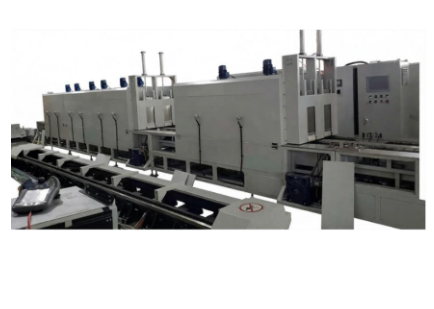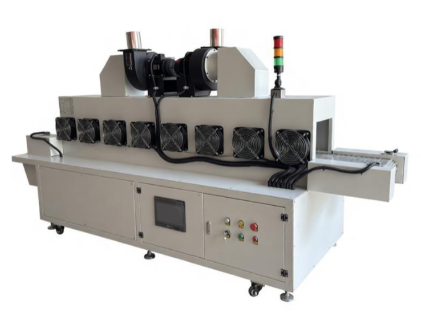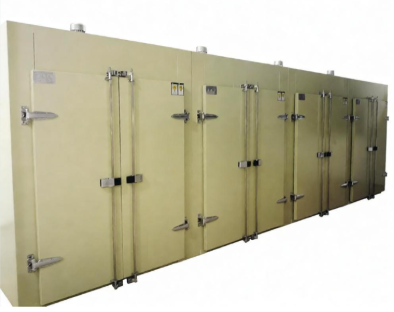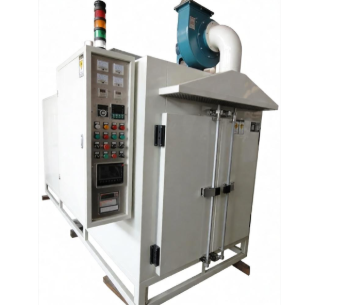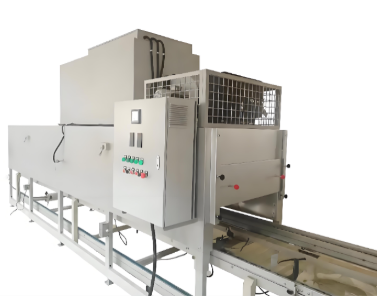
Fabric Adhesive Drying Tunnel Oven
Category:Tunnel Oven Production Line
Factory Direct
Stable Performance
Intl. Standards
Tech Support
Fast Delivery
Global Shipping

Introduction
The Fabric Adhesive Drying Tunnel Oven is an industrial continuous heat treatment system mainly used for continuous heating, drying, curing, and baking of sheets, fabrics, belts, and components coated, sprayed, or impregnated with adhesives, resins, and coatings.It is widely applied in processes requiring stable temperature control, efficient solvent evaporation, and uniform adhesive curing.
Core Applications
1. Textile and Leather Industry
Used for:
Carpet backing adhesive drying
Nonwoven fabric lamination and bonding
Leather surface coating curing
2. Electronics and Semiconductor Industry
Used for:
PCB adhesive coating drying
Encapsulation adhesive curing of electronic components
Insulating varnish curing
3. Packaging and Printing Industry
Used for:
Self-adhesive label drying
Paper coating and lamination
Special ink drying processes
4. Automotive and Industrial Applications
Used for:
Adhesive drying of automotive interior components
Curing of friction materials such as brake pads
Applicable Standards
Safety Standards
GB 5226.1 — Electrical Safety of Machinery — Electrical Equipment of Machines — Part 1: General Requirements
GB 15603 — General Rules for Storage of Hazardous Chemicals
(Applicable to explosion-proof equipment designs involving hazardous materials)
Environmental Protection Standards
Complies with VOCs (Volatile Organic Compounds) emission control requirements.
Usually equipped with exhaust gas recovery or treatment interfaces, such as:
RTO (Regenerative Thermal Oxidizer) systems
Other exhaust purification systems
Industry Standards
JB/T 10294 — Energy Consumption Classification of Industrial Ovens and Heating Furnaces
ISO 9001 Quality Management System
Equipment Features
1. Continuous and High-Efficiency Production
The equipment adopts an automatic conveyor feeding and discharging system, making it suitable for large-scale continuous production lines.
2. Precise Temperature Control
The oven adopts segmented independent temperature control with PID microcomputer adjustment technology. The temperature difference inside the oven is generally controlled within ±1°C to ±3°C, ensuring stable adhesive curing quality.
3. Multiple Heating Options
Available heating methods include:
Infrared heating
Hot air circulation heating
Microwave heating
Different heating methods can be selected according to adhesive characteristics and production requirements to achieve high thermal efficiency.
4. Explosion-Proof Safety Design
For solvent-based adhesives, the equipment can be equipped with:
Explosion-proof exhaust systems
Explosion-proof motors
Explosion-proof heating components
Safety pressure relief doors
to ensure safe operation during solvent evaporation.
If you're ready to take the next step, Leave your message below and we'll reply soon. 20+ years of manufacturing & export experience, a partner you can trust.