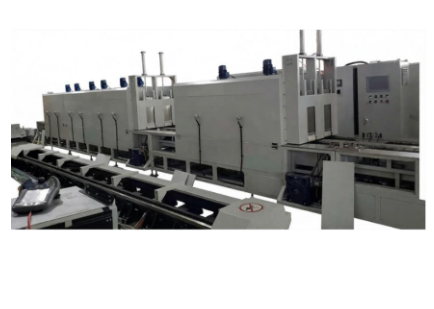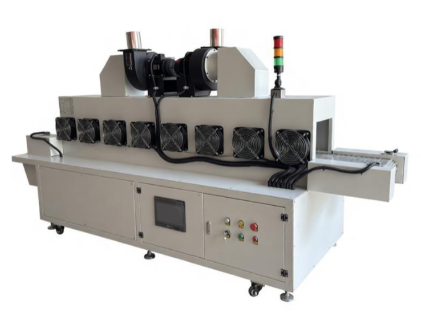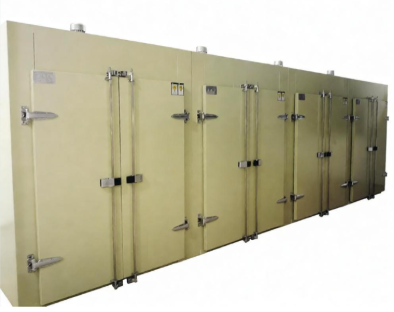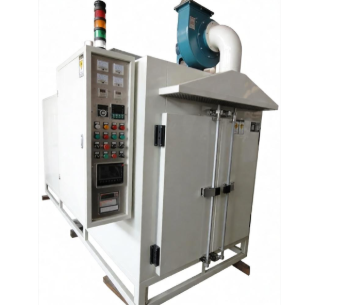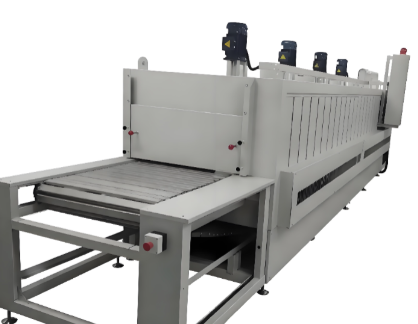
Glue Curing Tunnel Oven
Category:Tunnel Oven Production Line
Factory Direct
Stable Performance
Intl. Standards
Tech Support
Fast Delivery
Global Shipping

Introduction
The Glue Curing Tunnel Oven is a high-efficiency, continuous thermal curing or radiation curing equipment specially designed for industrial production lines. It uses transmission systems such as belts, chains, or mesh conveyors to smoothly transport products coated, dispensed, or sprayed with adhesive through a narrow tunnel-shaped heating chamber. Under precisely controlled temperature and processing time, the adhesive is rapidly dried, hardened, and formed.
Application
Electronics and Semiconductor Industry
Used for conformal coating drying on PCB circuit boards, adhesive fixing of electronic components, and glue encapsulation of LED modules.
Automotive Electronics Industry
Used for adhesive curing of electronic control systems, vehicle displays, sensors, and critical automotive components.
New Energy Industry
Used for adhesive dispensing and curing in lithium battery pack assembly, as well as heating and curing of sealing adhesives for photovoltaic module frames.
Optical and Medical Industry
Used for rapid curing and shaping of UV adhesives or heat-curable adhesives in lens assembly, medical syringes, and precision instruments.
Hardware and Packaging Industry
Used for continuous high-efficiency curing of printing inks after screen printing and adhesive coatings after packaging processes.
Standards
Although tunnel ovens are usually highly customized (non-standard designs) according to specific product requirements, their manufacturing and operation must comply with relevant national and industry standards.
Safety and Electrical Standards
GB 5226.1 — Electrical safety of machinery standards
GB 19517 — National technical safety specifications for electrical equipment
Explosion Protection and Heating Standards
Since adhesive volatile compounds may be flammable, the equipment should comply with:
GB 20115 — Safety requirements for industrial heating equipment
Relevant explosion-proof design specifications
Temperature Control Standards
The temperature uniformity inside the oven is generally required to reach high-level or Class A uniformity. Industry requirements typically control temperature variation within ±2°C to ±3°C.
Environmental Protection Standards
The equipment should comply with industrial exhaust emission requirements and is usually equipped with dedicated exhaust systems, waste gas collection ports, or recovery interfaces.
Features
Continuous and Efficient Operation
Overcomes the limitations of traditional batch-type ovens. Materials continuously pass through the equipment, enabling seamless integration with fully automated dispensing production lines.
Multi-Zone Independent Temperature Control
The internal chamber is divided into multiple independent heating sections, such as preheating zones, high-temperature curing zones, and cooling zones. Different temperature profiles can be configured according to adhesive requirements.
Various Heating Mechanisms
According to different adhesive types, the equipment can be equipped with:
Hot air circulation heating
Far-infrared radiation heating
UV-LED ultraviolet curing system
Energy-Saving and Safety Design
Uses high-quality aluminum silicate insulation cotton to reduce heat loss. The equipment is equipped with electric lifting mechanisms for convenient maintenance, over-temperature alarms, and forced exhaust systems for volatile gases.
If you're ready to take the next step, Leave your message below and we'll reply soon. 20+ years of manufacturing & export experience, a partner you can trust.