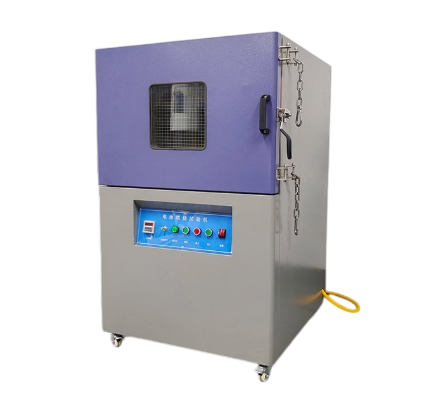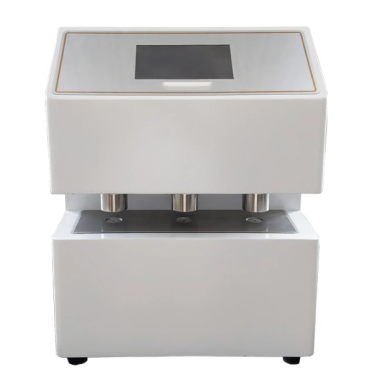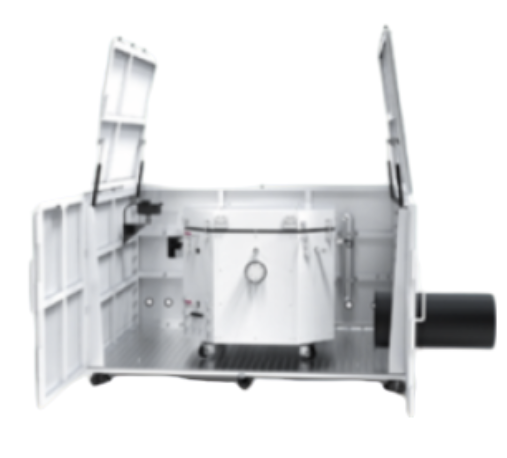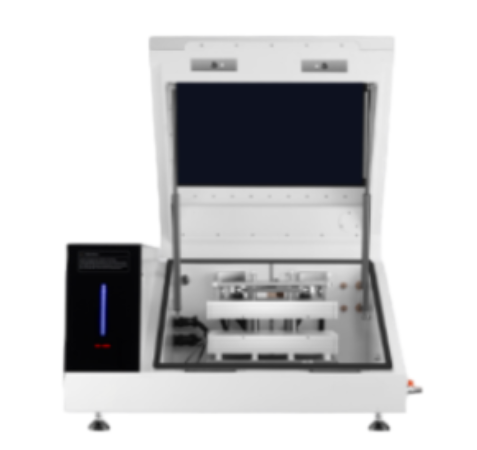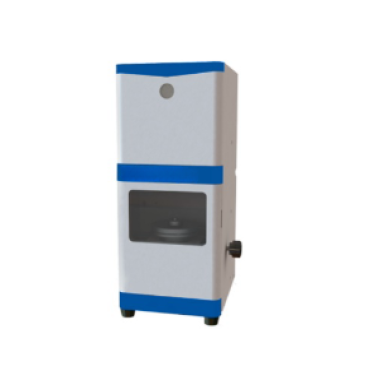
Model Coin-cell Swelling Tester
Category:Battery Performance Tester
Factory Direct
Stable Performance
Intl. Standards
Tech Support
Fast Delivery
Global Shipping

Introduction
The Model Coin-Cell Swelling System is designed for in-situ measurement of thickness and volume changes of coin-type lithium-ion cells during charge and discharge processes. The system adopts high-precision non-contact laser displacement sensing to capture micron-level swelling behavior under controlled temperature and pressure conditions. It provides reliable and repeatable data for material screening, structural optimization, and safety evaluation of coin-cell batteries.
Application
(1) In-situ swelling and thickness change measurement of coin-type lithium-ion cells during cycling.
(2) Expansion behavior evaluation of standard coin-cell formats including 2032, 2025, and 2016.
(3) Screening and comparison of electrode materials such as graphite, silicon-based anodes, and solid-state electrolytes.
(4) Mechanical stability and fatigue analysis of electrode stacks under pressure cycling.
(5) Thermal–mechanical coupling analysis under high-temperature and low-temperature environments.
(6) Safety and reliability assessment during fast charge, overcharge, and abuse testing.
(7) R&D validation and quality consistency evaluation for laboratory-scale battery development.
Standards
(1) ASTM E83 – Standard Test Method for Verification of Linear Displacement Measuring Systems.
(2) ISO 12417-1 – Mechanical Testing of Metals – Dilation Test (reference method).
(3) IEC 62660-2 – Secondary Lithium-Ion Cells – Reliability and Abuse Testing.
(4) DIN 51221 – Testing of Adhesives – Determination of Tensile Shear Strength (reference for deformation testing).
(5) CE Certification – Conformité Européenne.
Parameters
| Parameter | Specification |
|---|---|
| Displacement Range | ±500 μm (linear), ±0.5° (angular) |
| Linear Measurement Accuracy | ±0.05 μm |
| Angular Measurement Accuracy | ±0.005° |
| Displacement Resolution | 0.1 μm |
| Temperature Range | -20°C to 150°C |
| Temperature Ramp Rate | ≤ 2°C/min |
| Pressure Range | 0–10 bar |
| Test Channels | 8 channels |
| Data Acquisition Rate | 10,000 points/s/channel |
| Power Supply | AC 100–240 V, 50/60 Hz |
| Dimensions (W×D×H) | 400 × 350 × 600 mm |
| Weight | 65 kg (net) / 80 kg (gross) |
Features
(1) Micron-level non-contact laser displacement measurement with high repeatability.
(2) High-resolution detection of subtle thickness and volume changes in coin cells.
(3) Multi-environment testing capability with integrated temperature chamber.
(4) Dynamic pressure loading for electrode stack fatigue and structural response analysis.
(5) Eight-channel parallel testing to improve screening efficiency and data consistency.
(6) Laser-guided positioning system for precise coin-cell alignment.
(7) Automatic thermal drift compensation during long-term cycling tests.
(8) Dual redundant safety protection with emergency stop function.
(9) Glovebox-compatible design for oxygen- and moisture-sensitive chemistries.
Accessories
(1) Non-magnetic coin-cell holders for 2032, 2025, and 2016 formats.
(2) Laser displacement sensor modules.
(3) Temperature-controlled environmental chamber.
(4) Pressure loading and control unit.
(5) Data acquisition and analysis software.
(6) NIST-traceable displacement calibration standards (100 μm, 500 μm).
(7) Gas purification cartridge for inert atmosphere operation.
(8) Humidity sensor with data logging function.
Maintenance Information
(1) Periodically calibrate the laser displacement sensors using certified standards.
(2) Inspect coin-cell holders and pressure components for wear or deformation.
(3) Clean optical and sensing components to maintain measurement accuracy.
(4) Verify temperature and pressure control performance at regular intervals.
(5) Maintain software updates and perform routine data backups according to laboratory procedures.
FAQ
1. What is a Model Coin-cell Swelling System used for?
It measures the swelling behavior of coin-cell batteries under various charge, discharge, and environmental conditions.
2. How does the system operate?
Coin-cell samples are placed in the system, and dimensional changes are monitored in real time using sensors during cycling or storage.
3. What types of cells can be tested?
Coin-type lithium-ion, lithium-metal, and other small-format batteries.
4. How is test data recorded and analyzed?
Swelling measurements, dimensional changes, and deformation rates are captured digitally, displayed on the interface, and can be exported for analysis.
5. What maintenance is required for the system?
Regular cleaning of sample holders and sensors, calibration of measurement devices, inspection of electronic and mechanical components, and software updates.
If you're ready to take the next step, Leave your message below and we'll reply soon. 20+ years of manufacturing & export experience, a partner you can trust.