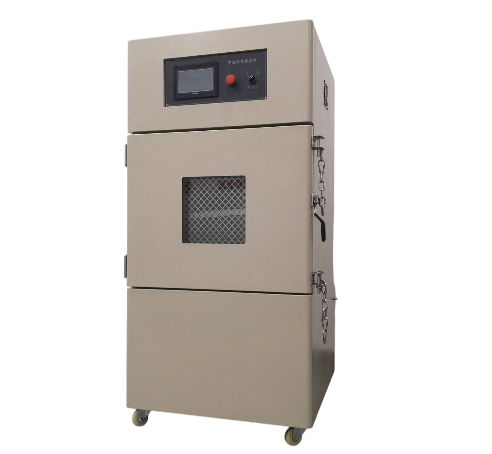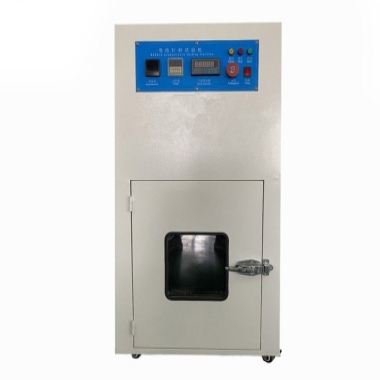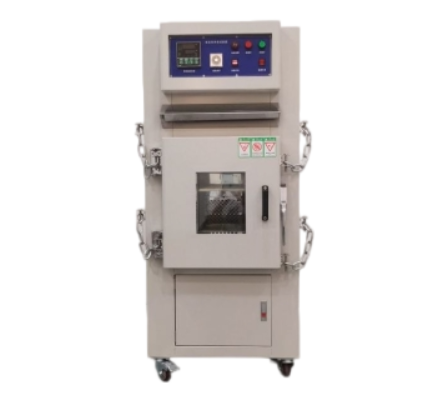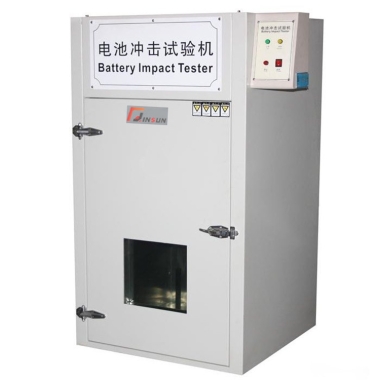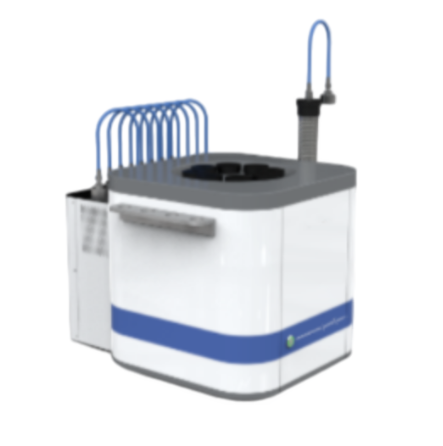
Solid Energetic Materials Stability Tester
Category:Battery Safety Tester
Factory Direct
Stable Performance
Intl. Standards
Tech Support
Fast Delivery
Global Shipping

Introduction
The Solid Energetic Materials Stability Tester monitors the changes in gas pressure over time during the thermal decomposition of solid materials (such as explosives and propellants) in a tightly sealed reaction vessel under isothermal heating conditions in real time and continuously. This method can accurately and repeatedly test the chemical instability of energetic materials caused by impurities that compromise their stability, incompatibility with surrounding substances, or aging, thus precisely characterizing the thermal decomposition reaction characteristics of energetic materials and scientifically assessing their thermal stability and storage life.
Applications
The Solid Energetic Materials Stability Tester is primarily used to assess the stability of solid energetic materials (such as explosives and propellants) under conventional storage and transportation conditions. It accurately characterizes the thermal decomposition reaction characteristics of materials by continuously monitoring the changes in gas pressure over time during the thermal decomposition of solid materials within a tightly sealed reaction vessel under isothermal conditions, thereby scientifically evaluating their thermal stability and storage life.
Standards
EN 13938-2: Respiratory Protective Equipment for Firefighters – Part 2: Positive Pressure Respirators (PPR) for Firefighting and Rescue Services
STANAG 4490: NATO Standardization Agreement 4490 – Jet Fuels – Requirements and Test Methods
MIL-STD-1751AMethods 1031, 1032 & 1033: Military Standard 1751A – Test Methods for Electrical and Electronic Equipment Used in Aircraft- Method 1031: Vibration Test- Method 1032: Shock Test- Method 1033: Temperature Cycle Test
EN 13763-13: Explosives for Civil Uses – Part 13: Thermal Stability Test – Accelerating Rate Calorimetry (ARC)
Technical Parameters
| Technical Parameter | Specification |
|---|---|
| Temperature range | 40 °C ~ 200 °C |
| Temperature fluctuation | ± 0.1 °C (within 60 minutes) |
| Temperature uniformity | ≤ 0.3 °C (at the bottom of any two test cavities in the furnace) |
| Pressure measurement range | 10 kPa ~ 300 kPa |
| Pressure measurement error | ≤ 0.1% FS |
| Pressure resolution | 0.01 kPa |
Features
1. Precise temperature control with high temperature uniformity and small fluctuation.
2. Supports long – term continuous real – time monitoring to meet different experimental testing requirements.
3. Allows for the setting of up to 5 levels of different experimental durations and temperature gradients.
4. Multiple units can be connected to a single machine, meeting the testing needs of 4 instruments simultaneously.
5. Remote communication control and human – machine isolation ensure the safety of experimenters during testing.
6. Equipped with a built – in thermal protector and gas overpressure detection function to ensure the safe use of the instrument.
Accessoriess
1. Test chamber assembly (compatible with multi-unit synchronous testing)
2. Solid energetic material sample holder (for positioning and securing samples within the test chamber)
3. Multi-unit connection cable (enabling interconnection between up to 4 units and a single unit)
4. Spare built-in thermal protection element (a spare part to ensure temperature safety)
5. Spare overpressure detection sensor (a spare part to maintain pressure detection function)
6. Communication connection cable (supports remote communication)
7. Test chamber seal (ensuring the sealing performance of the test chamber)
FAQ
1. What is the purpose of a Solid Energetic Materials Stability Tester?
It is used to evaluate the thermal and chemical stability of solid energetic materials, such as explosives, propellants, and pyrotechnics, to ensure safe handling, storage, and usage.
2. What types of materials can be tested?
The instrument can test a variety of solid energetic compounds, including powders, pellets, and pressed or cast formulations.
3. How does the tester work?
The tester heats the material under controlled conditions and monitors pressure, temperature, decomposition, or other indicators of instability to determine its stability characteristics.
4. What standards does the tester comply with?
It is designed to meet relevant military and industry standards for energetic material testing, including ISO, NATO, and national explosive safety regulations.
5. What safety features are included?
The device includes protective shielding, automated temperature and pressure control, emergency shutoff mechanisms, and data logging, ensuring safe operation during tests on potentially hazardous materials.
If you're ready to take the next step, Leave your message below and we'll reply soon. 20+ years of manufacturing & export experience, a partner you can trust.