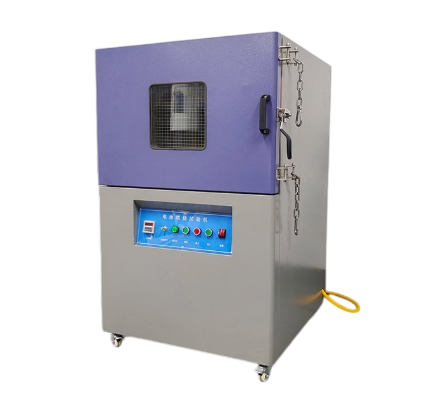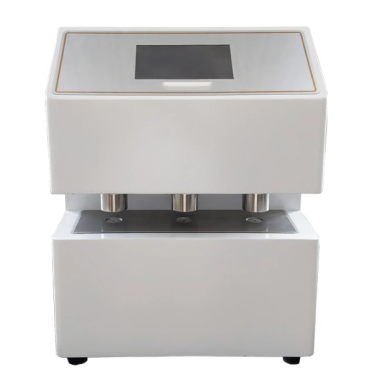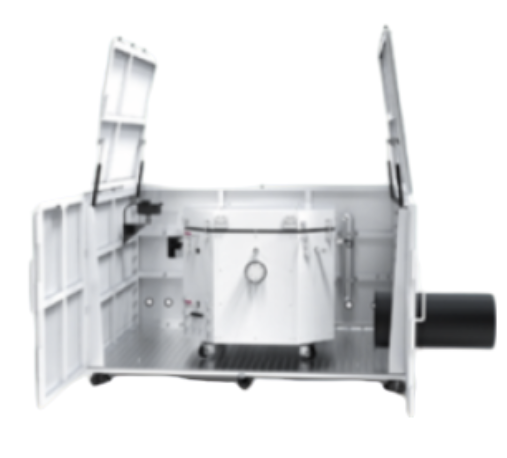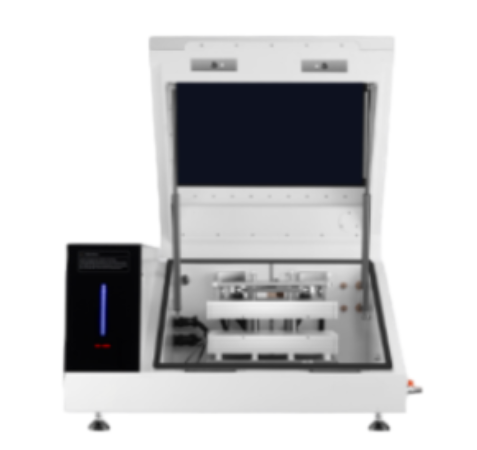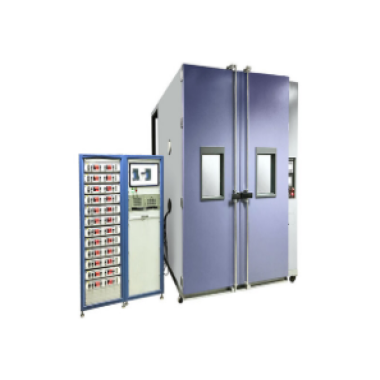
Thermal Cycle Wet Freezing Testing Machine
Category:Battery Performance Tester
Factory Direct
Stable Performance
Intl. Standards
Tech Support
Fast Delivery
Global Shipping

Introduction
The Thermal Cycle Wet Freezing Testing Machine is designed for comprehensive environmental testing, capable of simulating extreme temperature and humidity conditions. It provides precise control and high repeatability for accelerated aging, condensation resistance, and reliability testing of batteries, photovoltaic modules, and electronic components. Its dual-chamber design ensures simultaneous wet and dry testing, enabling efficient evaluation under multi-environment conditions.
Application
(1) Environmental performance testing of lithium-ion batteries and battery modules
(2) Design qualification and type approval testing for photovoltaic (PV) modules
(3) Reliability and durability testing of electronic control units (ECUs) and PCBA
(4) Research and development for automotive and renewable energy components
Standards
(1) IEC 61215 – Terrestrial Photovoltaic (PV) Modules: Design Qualification and Type Approval
(2) UL 1073 – Safety of Enclosures for Electrical Equipment
(3) ISO 16750-4 – Road Vehicles: Environmental Conditions and Testing for Electrical and Electronic Equipment
(4) CE Certification – Conformité Européenne
(5) RoHS Compliance – Restriction of Hazardous Substances
(6) Optional: IEC 60068 series for environmental testing of electronic equipment
Parameters
| Parameter | Specification |
|---|---|
| Temperature Range | -40°C to +85°C (operational) |
| Temperature Fluctuation | ≤ ±1°C |
| Temperature Deviation | ≤ ±1°C (steady state) |
| Temperature Uniformity | ≤ ±2°C (empty chamber) |
| Heating Rate | 10°C/min (typical, configurable) |
| Cooling Rate | 7°C/min (typical, configurable) |
| Humidity Range | 30%–98% RH (non-condensing) |
| Humidity Deviation | ±3% FS (at 85% RH ±2%, 90% RH ±2%) |
| Chamber Volume | 500 L (standard), expandable to 1,500 L |
| Power Supply | 380V/415V, 3-phase, 50/60Hz |
| Dimensions (W×D×H) | 1,200 mm × 1,800 mm × 2,000 mm |
| Weight | 800 kg (net) / 1,200 kg (gross) |
Features
Extreme Environmental Simulation: -40°C to +85°C operational range; 98% RH humidity control.
Ultra-Stable Performance: ±1°C temperature stability and ≤±2°C uniformity across chamber.
Rapid Transient Response: 10°C/min heating and 7°C/min cooling with auto-tuning PID.
Energy Efficiency: Advanced insulation and heat recovery for 40% lower power consumption; ECO mode for idle periods.
Safety Features: Dual overload protection, thermal cutout, current-limiting breaker, and door interlock.
User-Friendly Interface: 10” touchscreen HMI with preloaded test profiles and customizable hold times.
Remote Monitoring: Wi-Fi/Ethernet connectivity with real-time alerts via SMS or email.
Glovebox Compatibility: Controlled oxygen and moisture levels for sensitive component testing.
Accessories
(1) Universal sample racks (4 pcs, adjustable for batteries, PV modules, or PCBAs)
(2) Humidity sensor calibration capsules (10 pcs)
(3) Software Suite: EnviroTest Pro license for Windows/Linux, including 1-year cloud test report access
(4) Calibration and Safety: NIST-traceable temperature/humidity logger, emergency portable eyewash station
(5) Maintenance Kit: Spare heating elements, refrigerant filters, chamber cleaning solution (non-corrosive)
(6) Documentation: Multilingual quick-start guide, compliance certificates for IEC/UL/ISO standards
Maintenance Information
Regularly inspect and clean chamber surfaces to avoid residue accumulation.
Replace HEPA filters, heating elements, and refrigerant filters as recommended by the manufacturer.
Perform NIST-traceable calibration of temperature and humidity sensors annually.
Verify door interlocks and emergency shutdown circuits before each test series.
Store the unit in a dry, ventilated environment when not in use.
FAQ
1. What is a Thermal Cycle Wet Freezing Testing Machine used for?
It evaluates the durability and performance of materials and products under repeated wet freezing and thawing cycles.
2. How does the machine operate?
Samples are exposed to controlled cycles of water immersion or wetting, followed by freezing and thawing, simulating real-world environmental conditions.
3. What types of materials can be tested?
Plastics, coatings, metals, concrete, construction materials, and other products sensitive to freeze-thaw stress.
4. How is test data recorded and analyzed?
Temperature, cycle count, moisture exposure, and sample changes are monitored digitally, displayed on the interface, and can be exported for analysis.
5. What maintenance is required for the machine?
Routine cleaning of the chamber and sample holders, inspection and lubrication of moving parts, sensor and controller checks, calibration, and software updates.
If you're ready to take the next step, Leave your message below and we'll reply soon. 20+ years of manufacturing & export experience, a partner you can trust.