Putty sanding tester
Category:Other
Introduction
Product Introduction & Applications
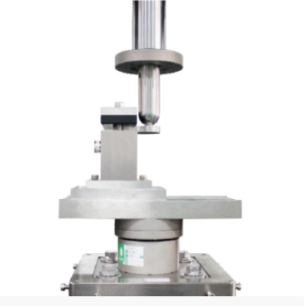
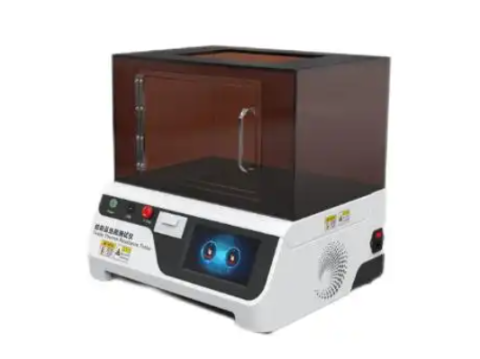
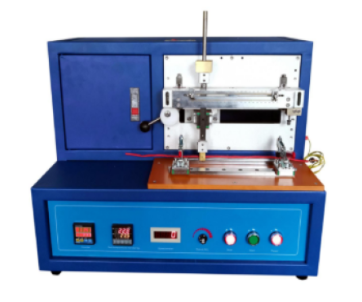
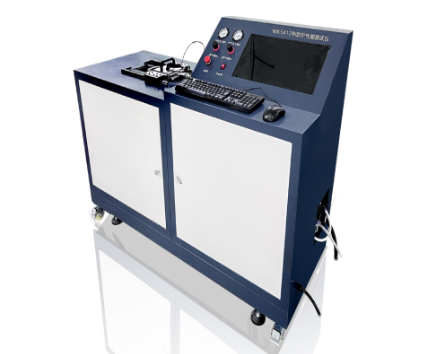
The Putty Sanding Tester is designed to evaluate the abrasion resistance and sanding performance of putty coatings. It simulates the sanding process by applying a controlled load and reciprocating motion to the test sample. This instrument is widely used in paint and coatings production, construction materials, quality control laboratories, and research institutions to ensure the consistency and durability of putty surfaces.
Standards
GB/T 1770 — Test Methods for Abrasion Resistance of Paints
YC/T 315-2009 — Technical Specification for Sanding Resistance of Putty
GB/T 1749-2025 — Test Methods for Paint and Coating Sanding Performance
Technical Parameters
| Parameter | Details |
|---|---|
| Friction Speed | 0–190 times/min, adjustable (one-way) |
| Test Stroke | 155 mm |
| Run Times | 0–9999 times (one-way count; two-way count ×2) |
| Load | Grinding head weight: 570±15 g; Additional counterweights: 50±3 g, 100±4 g, 200±7 g |
| Test Template Size | Tinplate, 50×120 mm or 200×80 mm, thickness 0.3–1.5 mm |
| Power Supply | AC 220V, 50/60 Hz |
| Power Consumption | Approximately 40 W |
| Dimensions & Weight | Compact and portable; varies by model |
Usage Notes
Ensure the test sample is securely fixed on the work platform before starting.
Select the appropriate load and counterweight according to the test requirements.
Adjust the friction speed and stroke carefully to match the relevant standard.
Clean the sanding head and test template after each test to maintain accuracy.
Operate the instrument in a dry, stable environment to prevent measurement errors.
FAQ
What materials can be tested with this instrument?
It is suitable for putty coatings used in paints, construction materials, and related applications.
How is the sanding load adjusted?
The load is adjustable by the weight of the grinding head and additional counterweight blocks.
Can the friction speed be changed?
Yes, the speed is adjustable from 0 to 190 times per minute.
What is the test stroke of the instrument?
The standard stroke is 155 mm, which represents the movement distance of the grinding head on the sample.
How do I maintain the tester for long-term use?
Clean the grinding head, counterweights, and test templates after use; store in a stable, dry environment to ensure consistent performance.