Battery Impact Testing Machine
Category:Battery Safety Tester
Factory Direct
Stable Performance
Intl. Standards
Tech Support
Fast Delivery
Global Shipping

Introduction
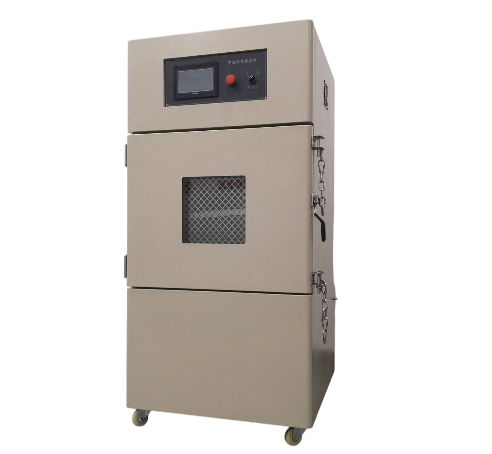
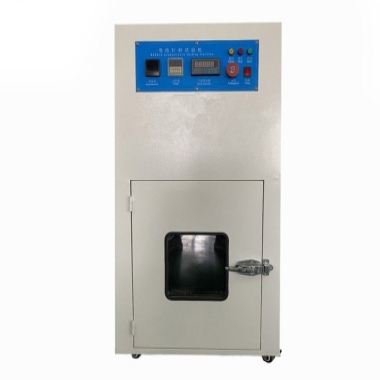
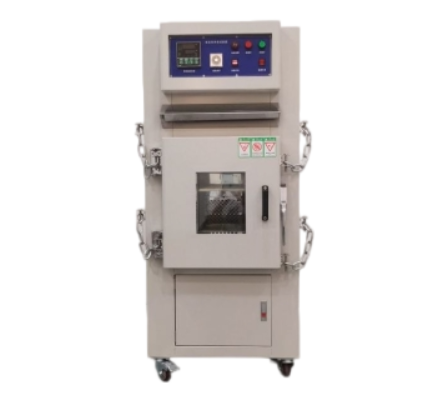
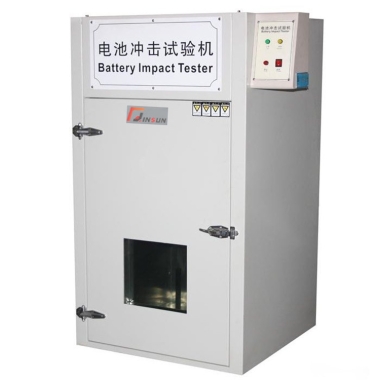
The Battery Impact Tester is designed for safety performance evaluation of lithium-ion cells and battery packs by simulating heavy object impact conditions.
The tester reproduces extreme mechanical abuse by allowing a specified mass to fall freely from a defined height and strike the battery sample through a metal bar, thereby assessing battery resistance to impact and the risk of fire, explosion, or leakage.
The system is equipped with a reinforced explosion-proof test chamber, motorized lifting mechanism, and automatic control system, making it suitable for laboratory certification testing and production safety verification.
Application
(1) Cylindrical lithium-ion cells (e.g., 18650, 21700)
(2) Prismatic lithium-ion batteries
(3) Pouch (polymer) lithium batteries
(4) Button and coin cells
(5) Lithium-ion battery packs for consumer electronics
(6) Power battery modules for electric vehicles
(7) Energy storage battery packs
Standards
(1) UN 38.3 – Lithium Batteries Transport Testing
(2) IEC 62133 – Safety Requirements for Portable Sealed Secondary Cells
(3) IEC 62619 – Safety Requirements for Industrial Lithium Batteries
(4) UL 1642 – Lithium Batteries Safety Standard
(5) GB 31241-2014 – Safety Requirements for Lithium-Ion Cells and Batteries
(6) GB/T 18287-2000 – Lithium-Ion Batteries for Mobile Communications Equipment
Technical Parameters
| Parameter | Specification |
|---|---|
| Test Item | Heavy Weight Impact Test |
| Test Objects | Button, cylindrical, pouch, prismatic lithium batteries and battery packs |
| Impact Mass | 10 kg or 9.1 kg (adjustable by counterweight blocks) |
| Impact Height | Max. 1000 mm, freely adjustable |
| Metal Bar Diameter | 15.8 mm (5/8 inch) |
| Impact Orientation | Vertical impact through metal bar |
| Workspace Dimensions | L300 × W250 × H1000 mm |
| Observation Window | L382 × W332 mm, explosion-proof laminated glass |
| Explosion Protection | Pressure relief port, reinforced enclosure |
| Auxiliary Functions | Built-in lighting, optional fire extinguisher, optional video monitoring* |
| Power Supply | Single-phase 220 VAC ±10% (110 VAC optional), 50/60 Hz |
| Rated Power | 1 kW |
| Operating Temperature | 25 ± 3 ℃ (recommended) |
| Operating Humidity | 30–90 %RH |
| Installation Dimensions | W800 × D700 × H1815 mm |
| Equipment Weight | Approx. 300 kg |
* Video monitoring requires customer-provided PoE switch compliant with IEEE 802.3af/at.
Features
(1) Fully automatic testing according to selected standards via HMI interface
(2) Compatible with 10 kg and 9.1 kg impact weights, adjustable by counterweight blocks
(3) Freely adjustable impact height to meet different standard requirements
(4) Motorized hook and worm-gear lifting mechanism with self-locking function for enhanced safety
(5) Mechanical safety lock designed for long-duration maintenance operations
(6) Double-layer reinforced explosion-proof sheet metal test chamber
(7) Explosion-proof pressure relief ports and laminated explosion-proof glass observation window
(8) Built-in illumination for clear observation during testing
(9) Limit pins to prevent accidental falling of the weight block
(10) High-quality electrical components ensuring stable and reliable operation
(11) Supports on-site and remote control operation switching
Accessories
(1) Standard impact weight blocks (10 kg / 9.1 kg)
(2) Metal impact bar (Ø15.8 mm)
(3) Explosion-proof observation window
(4) Built-in illumination system
(5) Optional fire extinguishing device
(6) Optional video monitoring system
Maintenance Information
(1) Regularly inspect lifting mechanism, safety locks, and limit pins
(2) Check explosion-proof glass and enclosure for damage before testing
(3) Keep electrical components clean and dry
(4) Calibrate impact height and weight periodically
(5) Perform routine maintenance according to operating frequency
FAQ
1. What is the primary purpose of this tester?
It evaluates the mechanical safety of batteries by simulating impacts or drops, helping to assess the risk of internal damage, short circuits, or thermal runaway.
2. Which types of batteries can be tested using this device?
The tester is suitable for lithium-ion, nickel-metal hydride, lead-acid, and other rechargeable or primary battery types.
3. How does the tester operate?
It drops or strikes the battery with a controlled force, angle, and mass while monitoring for deformation, leakage, or abnormal reactions.
4. Which standards does this tester comply with?
It supports international battery safety standards, including UN 38.3. IEC 62133. and UL 2054.
5. Who typically uses this equipment?
Battery manufacturers, quality control laboratories, and R&D teams use it to ensure product safety, validate mechanical robustness, and comply with transportation regulations.
If you're ready to take the next step, Leave your message below and we'll reply soon. 20+ years of manufacturing & export experience, a partner you can trust.