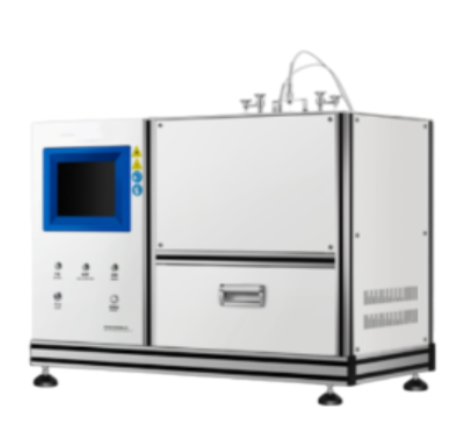
Solid Auto – ignition Point Tester
Category:Battery Safety Tester
Factory Direct
Stable Performance
Intl. Standards
Tech Support
Fast Delivery
Global Shipping

Introduction
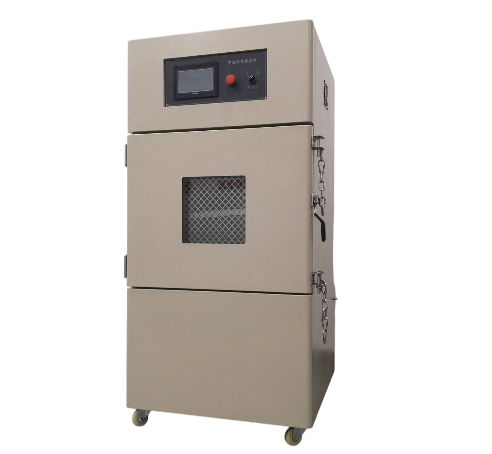
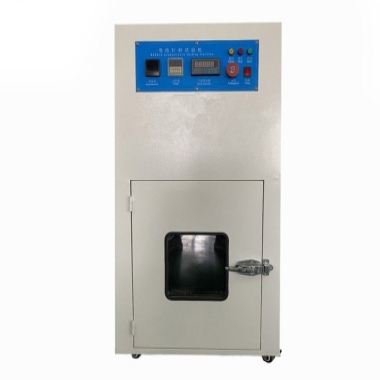
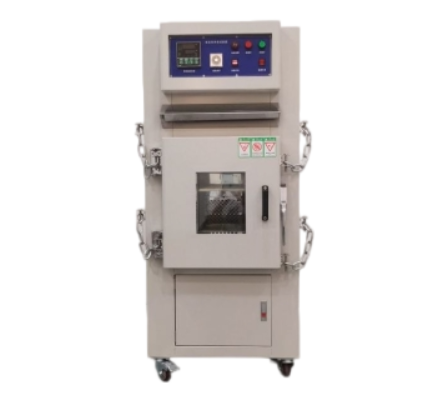
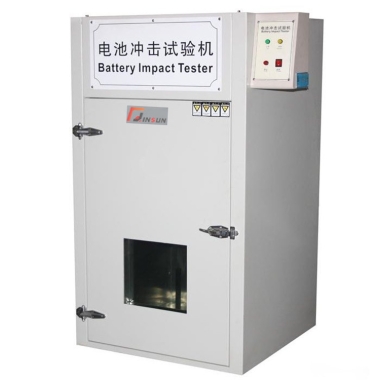
This tester determines the self – ignition characteristics of solid chemical products by placing the substances in a 20mm – side – length cubic wire mesh and increasing the temperature. It complies with standards such as GB/T 21756 – 2008 *Determination of the Relative Self – Ignition Temperature of Solid Substances in Chemical Products for Industrial Use* and NF T20 – 036.
Applications
This testing instrument provides data on the spontaneous combustion of solid products induced by high temperatures, thereby determining the spontaneous combustion properties of solid chemical products. The instrument is not suitable for explosive products, products that spontaneously combust at room temperature or in air, or products that melt under these experimental conditions. This instrument supports two testing modes: “Standard Test” and “Self-Test Mode.” The “Standard Test” is used to determine the spontaneous combustion properties of solid substances, while the “Self-Test Mode” is used to calibrate the temperature sensor, ensuring the reliability of the test accuracy. This instrument meets all requirements for solid spontaneous combustion point testing and features automatic heating and temperature control functions, greatly facilitating the production and transportation supervision of solid substances.
Standards
It meets the requirements of GB/T 21756-2008 “Determination of Relative Autoignition Temperature of Solid Substances for Industrial Use”, French National Standard NFT20-036-1985 “Determination of Relative Autoignition Temperature of Solid Solids for Industrial Use”, and NY/T1860 “Experimental Guidelines for the Determination of Physicochemical Properties of Pesticides” Part 24: Relative Autoignition Temperature of Solids.
Technical Parameters
|
Working Environment |
(5~40)℃, <85%RH |
|
Test Objects |
Solid |
|
Temperature Control Range |
Room temperature~650℃ |
|
Standard Rise Rate |
0.5 ℃/min |
|
Customized Rise Rate |
(0.1~3.0)℃/min |
|
Temperature Measurement Range |
(0~800)℃ |
|
Temperature Measurement Resolution |
0.1 ℃ |
|
Temperature Measurement Accuracy |
±2.5 ℃ below 300 ℃ |
|
Heating Chamber Capacity |
±(0.75% of the reading) above 300 ℃ |
|
Timing Range |
2L |
|
Mesh Cage Size |
(0~96)h |
Features
(1)It adopts an embedded processor and the Windows CE operating system.
(2)With an 8 – inch liquid – crystal touch screen, it can display the test status in real – time.
(3)It supports two working modes, the “standard mode” and the “custom mode” (during the custom experiment, it can save the exothermic peak value in real – time, etc.), taking into account both the standardization and flexibility of the test.
(4) It integrates high – temperature heat – insulation technology, temperature control, and precise detection technology.
(5) It uses an electrically heated muffle furnace with natural air – circulation convection to ensure uniform heating of the samples.
(6) The furnace cavity is made of heat – insulating vacuum ceramic fiber, which has a good heat – insulation effect.
7) The cubic wire mesh is hung at the bottom of the furnace cover, making it safe and convenient to place samples.
(8)It realizes automatic heating control, temperature control, and combustion detection.
(9)A cleaning rod is provided for cleaning the inner cavity’s central through – hole.
(10)A debris tray is provided to collect samples falling from the wire mesh and residual samples cleaned out by the rod.
(11)A cooling bracket is provided to place the assembled furnace cover on it for cooling after the test.
(12)It uses a thermocouple sensor to quickly and accurately respond to temperature changes.
(13)It displays the time – temperature curve in real – time, and the original data can be viewed.
(14)The test process is fully automated, requiring no manual intervention. It supports functions such as parameter setting, data storage, and report viewing.
Accessoriess
(1)Core Operating Components
Test Carrier Component: 20mm side length cubic metal mesh (for loading solid samples, matching standard test requirements);
Heating Unit: High-temperature muffle furnace with natural air circulation convection (ensuring uniform sample heating);
Furnace Chamber System: Vacuum ceramic fiber furnace chamber (excellent thermal insulation) + furnace lid with bottom hooks (for easy sample placement);
Temperature Monitoring Component: Thermocouple sensor (fast and accurate response to temperature changes);
Control and Display Module: Embedded processor, Windows CE operating system, 8-inch LCD touchscreen (real-time display of test status and time-temperature curve);
Operational Auxiliary Components: Cleaning rod (for cleaning the furnace chamber interior), debris tray (for collecting sample residue), cooling bracket (for placing the furnace lid for cooling after testing);
Functional Unit: Automatic heating/temperature control module (supporting precise temperature control).
(2)Auxiliary Accessories
Sample Processing: Sample spoon (for quantitative solid sample taking), sample grinding/sieving tools (to ensure uniform sample particle size);
Calibration and Maintenance: Standard auto-ignition point sample (for instrument accuracy calibration), high-temperature resistant protective gloves (for operating the furnace lid);
Data Management: USB flash drive (for exporting test data, time-temperature curves, and reports).
Maintenance Information
(1)Routine Inspection: Check electrical connections, heating elements, and sensors for wear or damage before each test.
(2)Cleaning: Remove any residue, soot, or debris from the combustion chamber and sample holder after testing.
(3)Calibration: Periodically verify temperature sensors and timers to ensure accurate auto-ignition point measurements.
(4)Safety Checks: Confirm emergency stops, interlocks, and protective shields are fully functional.
(5)Lubrication: Apply recommended lubrication to any moving parts as specified by the manufacturer.
(6)Storage: Store in a dry, dust-free environment to prevent corrosion or sensor drift.
(7)Troubleshooting: Record recurring issues and follow the manufacturer’s guidance for repairs or part replacements.
FAQ
1. What is a Solid Auto-Ignition Point Tester used for?
It is used to determine the auto-ignition temperature of solid materials, which is critical for assessing fire hazards and material safety in industrial and laboratory settings.
2. Which types of materials can be tested?
The tester can evaluate a wide range of solid substances, including fuels, polymers, composite materials, and other combustible solids.
3. How does the Solid Auto-Ignition Point Tester work?
The device gradually heats the sample under controlled conditions while monitoring temperature and ignition onset, accurately determining the point at which the material spontaneously ignites.
4. What safety features are included?
It is equipped with emergency stops, interlocks, and protective shields to ensure safe operation during high-temperature testing.
5. How often should the tester be calibrated and maintained?
Calibration and maintenance, including sensor checks, cleaning, and inspection of heating elements, should follow the manufacturer’s schedule—typically every 3–6 months depending on usage frequency.
If you're ready to take the next step, Leave your message below and we'll reply soon. 20+ years of manufacturing & export experience, a partner you can trust.