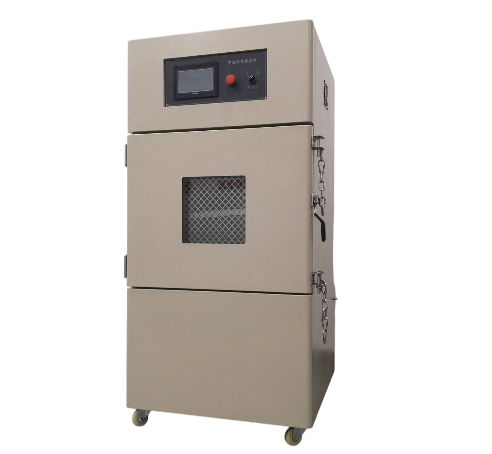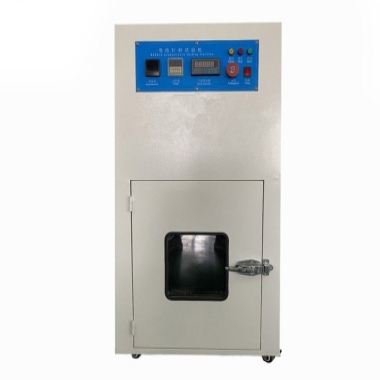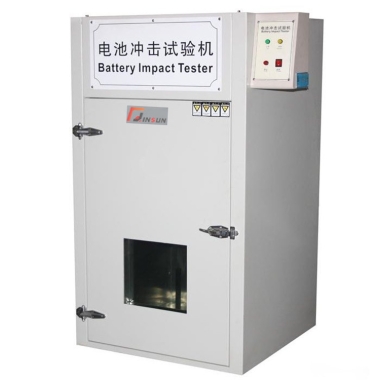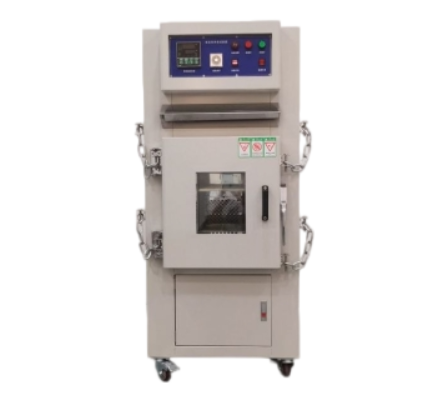
Battery Short-Circuit Testing Machine
Category:Battery Safety Tester
Factory Direct
Stable Performance
Intl. Standards
Tech Support
Fast Delivery
Global Shipping

Introduction
The Battery Short-Circuit Tester is designed for external short-circuit safety testing of lithium-ion batteries and battery packs.
The system simulates external short-circuit conditions under both room temperature and elevated temperature environments, while simultaneously detecting, recording, and monitoring battery surface temperature during the test.
The equipment consists of a short-circuit control unit and a temperature-controlled explosion-proof oven. It meets the safety testing requirements of multiple international and national standards and is widely used for certification testing, quality control, and battery safety evaluation.
Application
(1) Consumer Electronics Batteries
Lithium-ion batteries and battery packs used in smartphones, tablets, laptops, power banks, Bluetooth earphones, smart watches and wearable devices.
(2) Power Tool Batteries
Rechargeable lithium battery packs for electric drills, screwdrivers, garden tools and portable industrial equipment.
(3) Electric Vehicle Batteries
Cylindrical, prismatic and pouch lithium-ion cells and battery modules used in electric vehicles (EV), hybrid electric vehicles (HEV) and electric motorcycles.
(4) Energy Storage Batteries
Lithium battery cells and modules for residential, commercial and industrial energy storage systems (ESS).
(5) New Energy Battery Modules
Battery packs and modules used in solar energy storage systems, backup power systems and telecom base stations.
(6) Small Portable Batteries
Button cells, coin cells and small-capacity lithium batteries used in medical devices, sensors and portable electronic products.
(7) Battery Certification & Compliance Testing
Applicable for battery safety testing in certification laboratories, third-party testing institutions and manufacturer quality control departments.
Standards
(1) IEC 62133-2012 – Safety Requirements for Portable Secondary Lithium Cells and Batteries
(2) UL 1642:2012 – Lithium Batteries Safety Standard
(3) UN 38.3 – Lithium Batteries Transport Testing
(4) GB 31241-2014 – Safety Requirements for Lithium-Ion Cells and Batteries
(5) GB/T 741-2014 – External Short-Circuit Test Method for Batteries
Technical Parameters
| Parameter | Specification |
|---|---|
| Test Item | External short-circuit test |
| Test Objects | Lithium-ion cells and battery packs |
| Applicable Standards | GB 31241-2014, UN 38.3, IEC 62133-2012, GB/T 741-2014 |
| Power Supply | Single-phase 220 VAC ±10% (110 VAC optional), 50/60 Hz |
| Rated Power | 1 kW |
| Operating Temperature | 25 ± 3 ℃ (recommended) |
| Operating Humidity | 30–90 %RH |
| Short-Circuit Voltage | Max. 100 V, accuracy ±0.2% |
| Short-Circuit Current | Max. 200 A, accuracy ±0.2% |
| Short-Circuit Resistance | 80 ± 20 mΩ, load 4 kW |
| Oven Temperature Range | Up to 150 ± 2 ℃ |
| Battery Temperature Measurement | Max. 200 ℃, accuracy ±1 ℃ |
| Explosion-Proof Oven Size | W700 × D570 × H935 mm |
| Control Cabinet Size | W530 × D400 × H1150 mm |
| System Weight | Approx. — kg (configuration dependent) |
Accessories
(1) Explosion-proof temperature-controlled oven
(2) Short-circuit control unit
(3) Imported DC contactors
(4) Battery adapter terminals for multiple sizes
(5) Surface temperature sensors
(6) Explosion-proof observation window
(7) Built-in illumination system
Maintenance Information
(1) Regularly inspect DC contactors and electrical connections
(2) Check explosion-proof oven seals and pressure relief components
(3) Verify temperature sensor accuracy periodically
(4) Keep ventilation ducts clean to maintain temperature uniformity
(5) Perform routine system calibration and safety checks
FAQ
1. What is the primary purpose of this tester?
It evaluates the safety of batteries by simulating short-circuit conditions, helping to assess thermal, electrical, and mechanical stability under fault scenarios.
2. Which types of batteries can be tested using this device?
The tester is suitable for lithium-ion, nickel-metal hydride, lead-acid, and other rechargeable or primary battery types.
3. How does the tester operate?
It creates a controlled electrical short circuit across the battery terminals and monitors voltage, current, temperature, and any abnormal behavior such as swelling or leakage.
4. Which standards does this tester comply with?
It supports international battery safety standards, including IEC 62133. UN 38.3. and UL 2054.
5. Who typically uses this equipment?
Battery manufacturers, quality control laboratories, and R&D teams use it to ensure battery safety, verify compliance with regulations, and improve design reliability.
If you're ready to take the next step, Leave your message below and we'll reply soon. 20+ years of manufacturing & export experience, a partner you can trust.